After the whirlwind of flights, lounges, and finally collapsing into bed in Belfast, I woke up ready for my first real day in Ireland. If you’ve been following along, you know this trip is part of my “solo‑ish” adventure along the Wild Atlantic Way – a journey I booked on a whim and have been pinching myself about ever since. If you’re just joining me here, welcome! You haven’t missed much – just a little chaos, a lot of legroom, and the thrill of arriving somewhere brand new.
This was the day Ireland started to reveal itself: not just through postcard views, but through its history, its legends, and its winds that nearly knocked me off my feet (literally). From walking the streets of Belfast and learning about its complicated past, to standing in awe at the Giant’s Causeway, this day had everything – stories, surprises, and even a few cows waiting at the top of a cliffside trail.
Belfast: History, Headlines, and My First Guinness
Our first full morning in Ireland began with a hotel breakfast – coffee, eggs, toast, and the kind of polite small talk that happens when you’re still learning everyone’s names. By the time we gathered in the lobby, there was a buzz of anticipation. This was it: our first real day of exploring.
The coach carried us into the heart of Belfast, and along the way Catherine, our guide, casually pointed out the shipyard where the Titanic was built. Somehow, I had completely missed that fact. The Titanic – the Titanic – was built right here. Cue me staring out the window, humming “My Heart Will Go On,” and wondering how I didn’t know this.
In the city center, we met a local guide who led us on a walking tour. Belfast is a city that wears its history openly. The architecture is beautiful, but the stories are what stay with you. Much of the tour focused on The Troubles, the decades‑long conflict in Northern Ireland that stretched from the late 1960s until the Good Friday Agreement in 1998. It was a period marked by political and national divisions, violence, and loss, and while peace has held for more than two decades, reminders are everywhere – in murals, memorials, and the way people still talk about it.
We passed the Albert Memorial Clock Tower, which leans about four feet off center thanks to a shaky foundation. Belfast’s own version of the Leaning Tower of Pisa, though with far fewer tourists taking goofy photos of themselves “holding it up.”

After the tour, we had some free time. I stuck close to Catherine to get my bearings before I wandered off, and as we walked past the courthouse, we noticed a flurry of activity – police at the entrance, news cameras clustered outside. My curiosity got the better of me, so I nudged Catherine to ask what was going on (because let’s be honest, a local asking is far less awkward than me barging in). She did, and the reporters told us it was the trial of “Soldier F,” a former British soldier facing charges related to Bloody Sunday. It was a sobering reminder that Northern Ireland’s history isn’t just in the past – it’s still unfolding in real time.
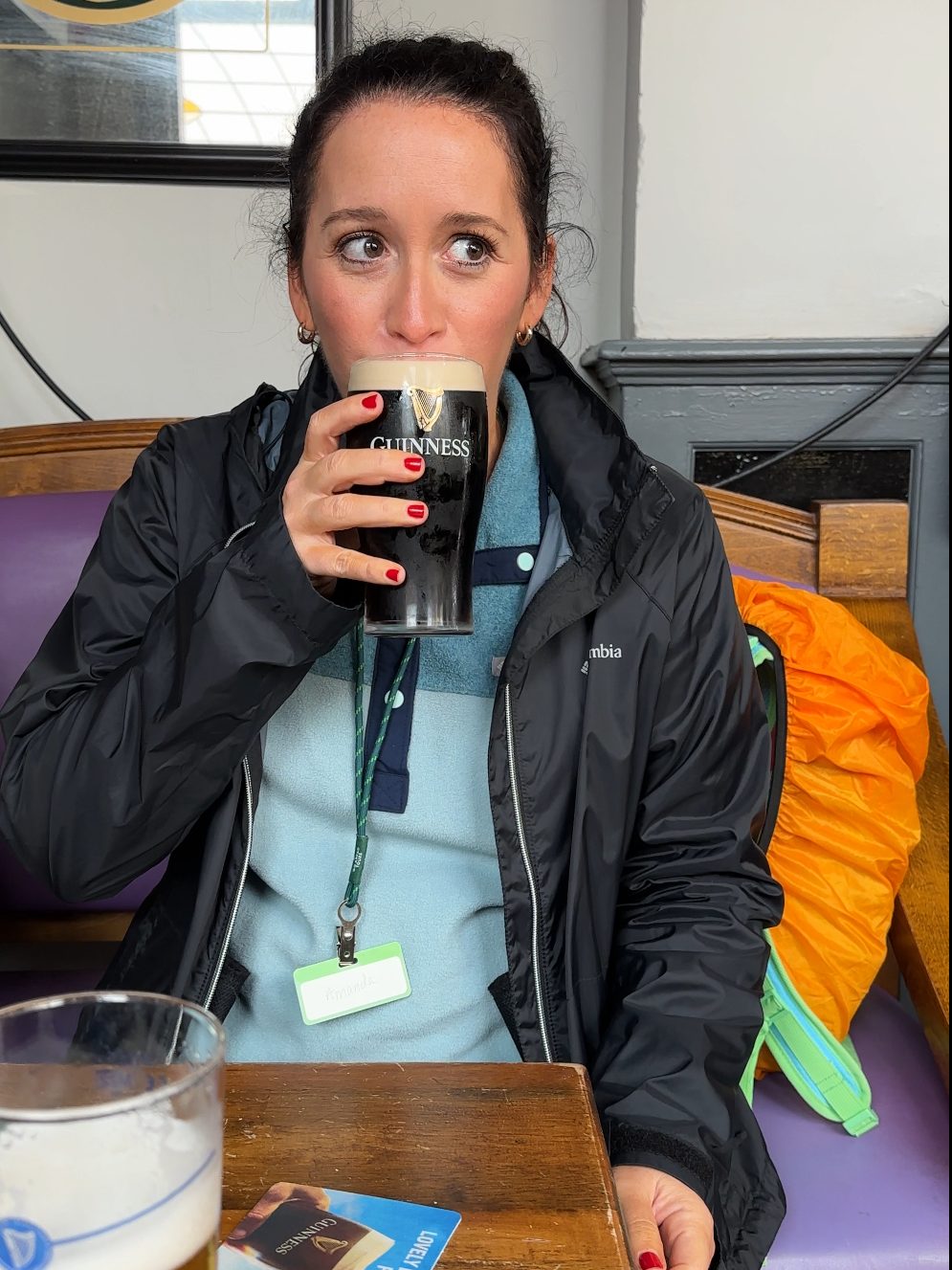
Wanting to lighten the mood, I joined a couple of fellow travelers who suggested ducking into a pub. Day one in Ireland – of course I was going to a pub. And of course, I was going to order a Guinness. When in Rome Ireland, right? Everyone swears Guinness tastes different in Ireland – creamier, smoother, somehow magical. Here’s the thing: I don’t like beer. I usually think it tastes awful. But I figured if there was ever a time to give it a fair shot, this was it.
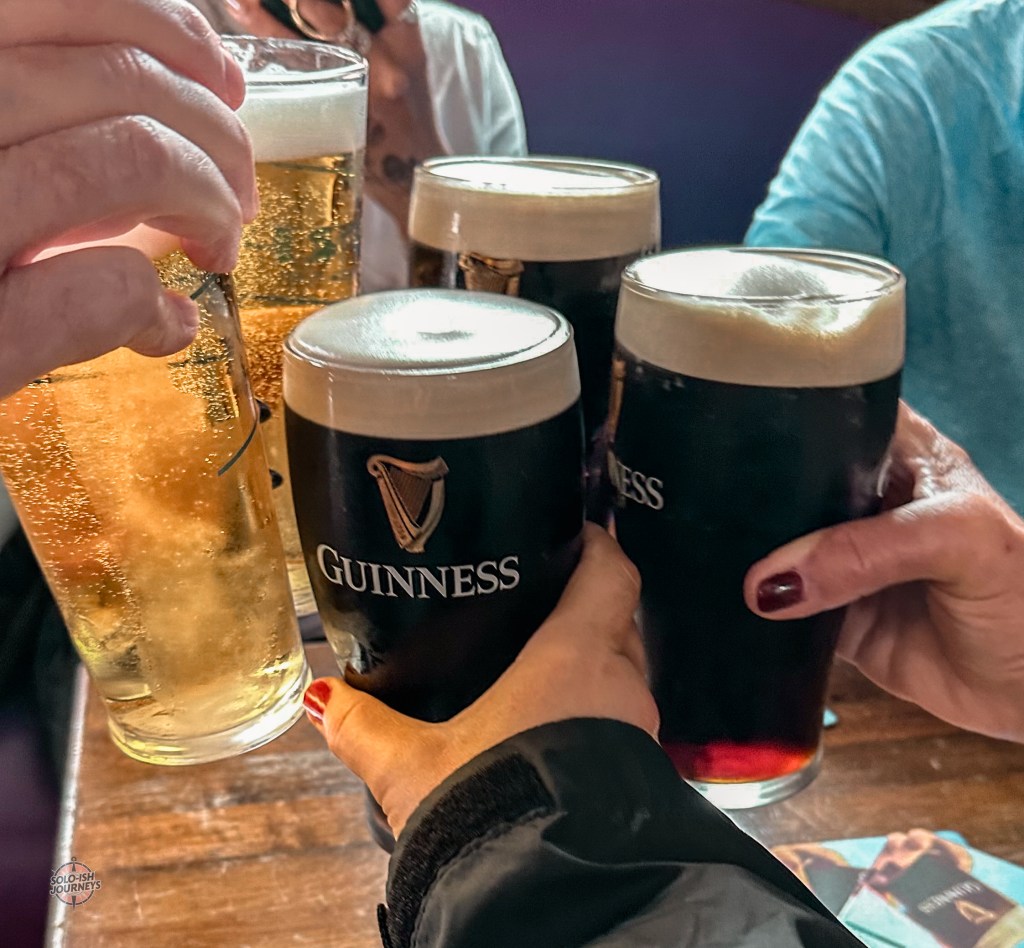
So I took a sip. And… it tasted like beer. Still not my thing. I gave myself points for trying, though, and now I can officially say I drank a Guinness in Ireland. Bucket list item checked, even if I didn’t love it.
With that, our free time wrapped up, and we regrouped at the bus for the next leg of the day: a drive north to one of Ireland’s most famous natural wonders, the Giant’s Causeway.
From Conflict to Coastlines: The Giant’s Causeway
After regrouping, we boarded the coach again and headed north toward one of Ireland’s most famous natural wonders: The Giant’s Causeway.
On the way, Catherine read us the legend of Fionn (Finn) McCool, the mythical Irish giant. According to folklore, Fionn built the causeway as stepping stones to Scotland to fight his rival, the Scottish giant Benandonner. But when Fionn realized Benandonner was much bigger than expected, his clever wife disguised Fionn as a baby. When Benandonner saw the “baby,” he panicked – if the baby was that big, the father must be enormous! He fled back to Scotland, tearing up the causeway behind him.
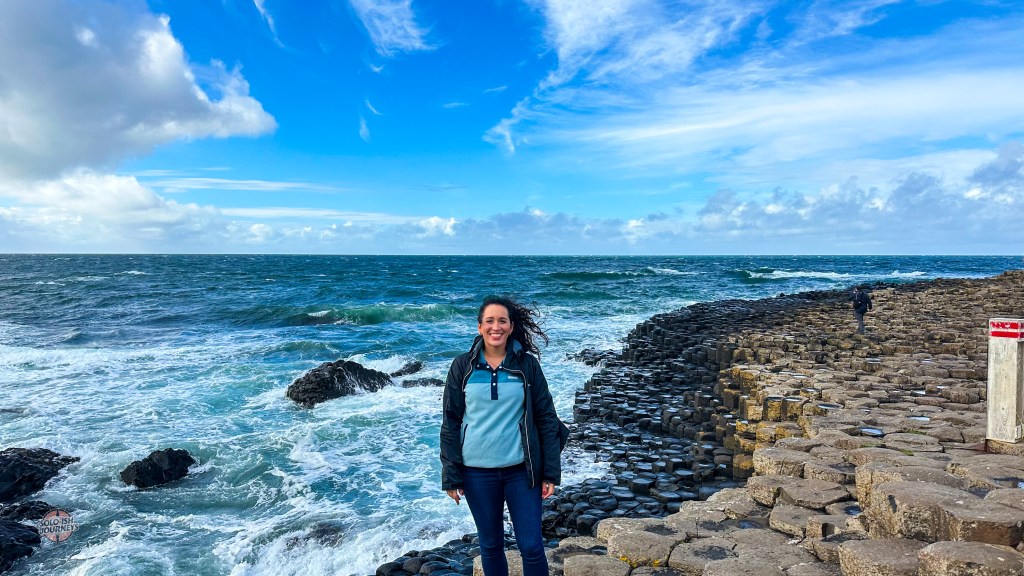
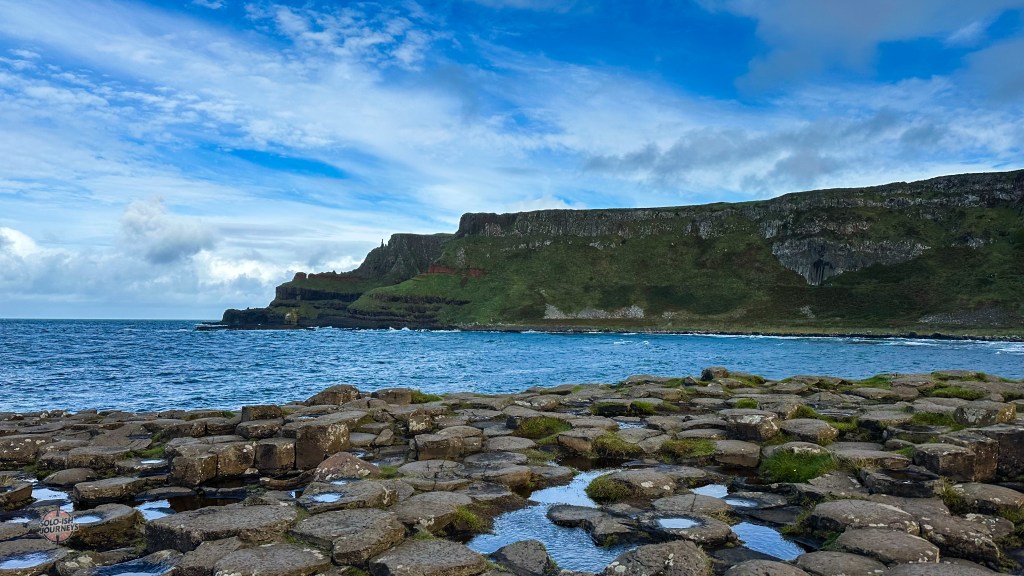
The science is less whimsical but equally fascinating: the Giant’s Causeway is made up of about 40,000 interlocking basalt columns, formed by volcanic activity around 50–60 million years ago. Most are hexagonal, and they look like a giant’s staircase tumbling into the sea. It’s a UNESCO World Heritage Site and one of the most visited attractions in Northern Ireland.

Hiking, Wind, and Cows (Oh My)
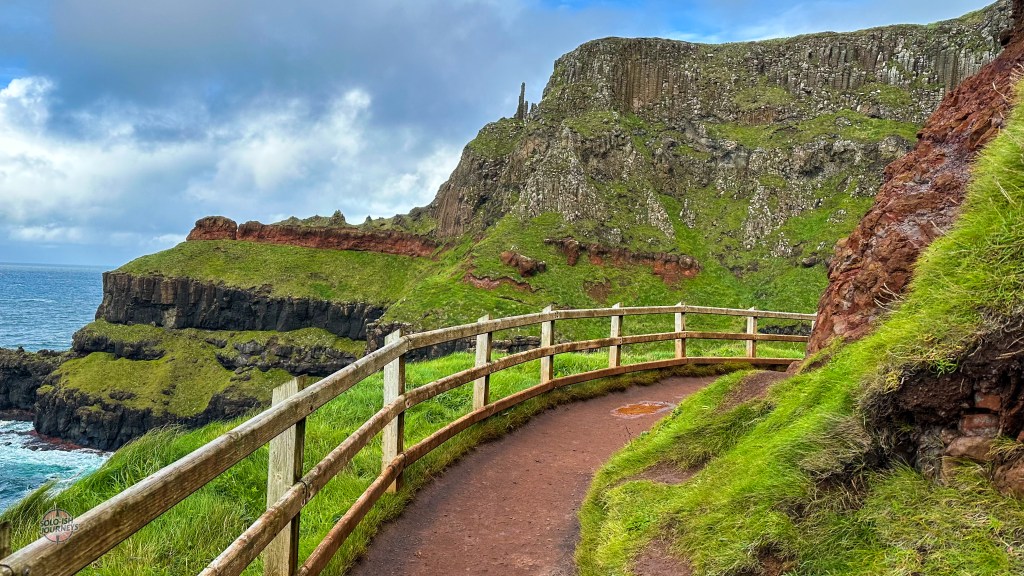
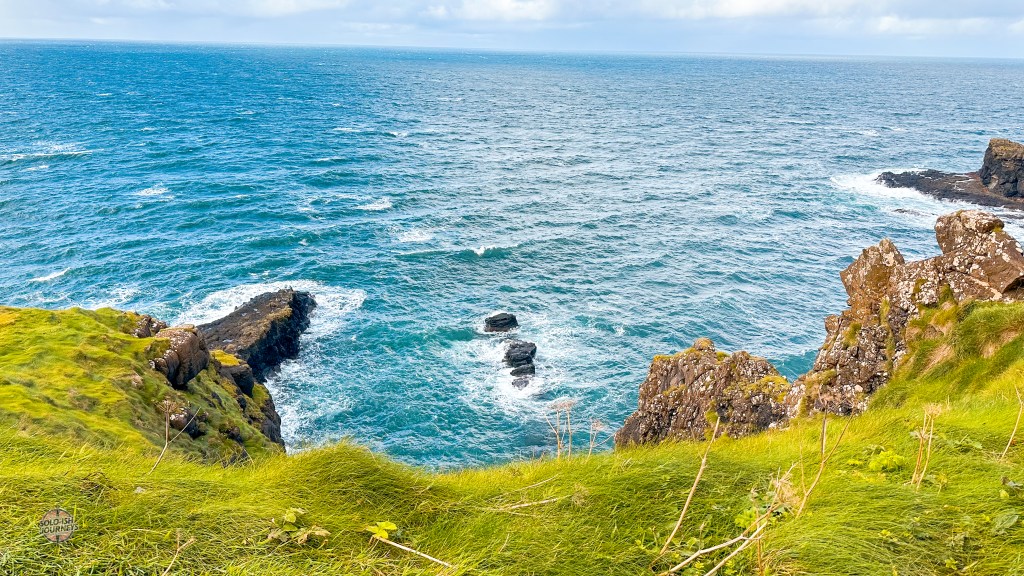
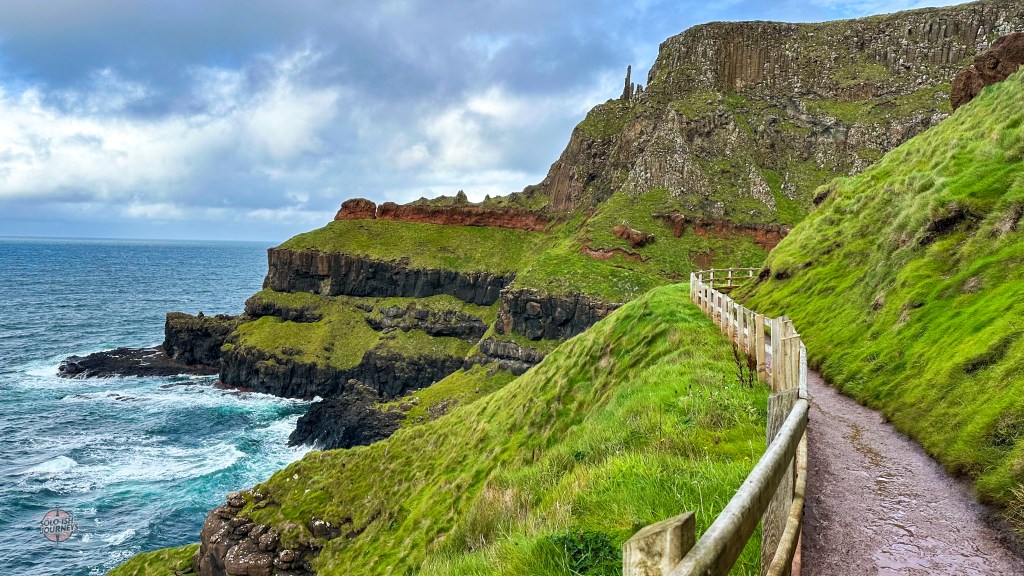
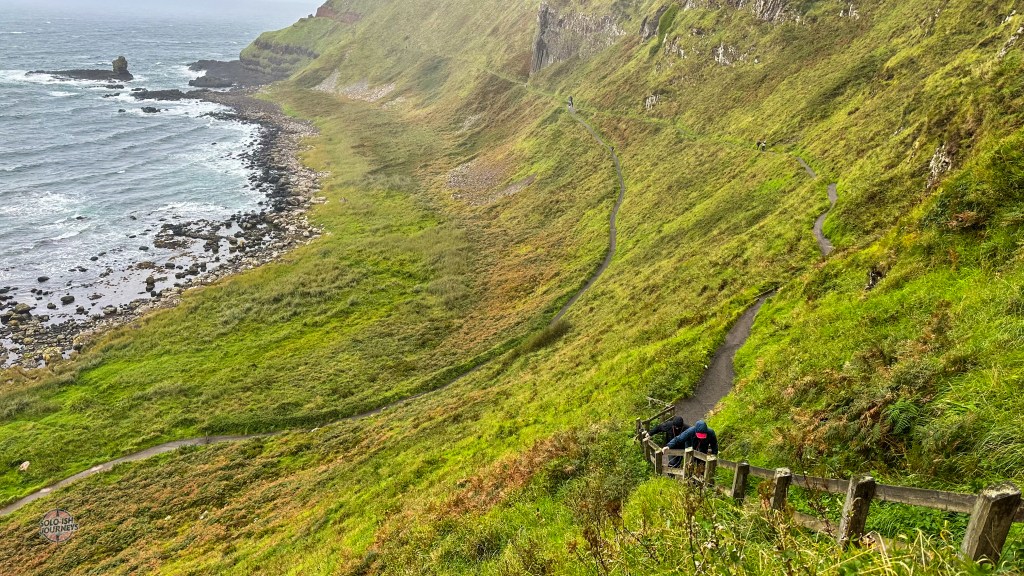
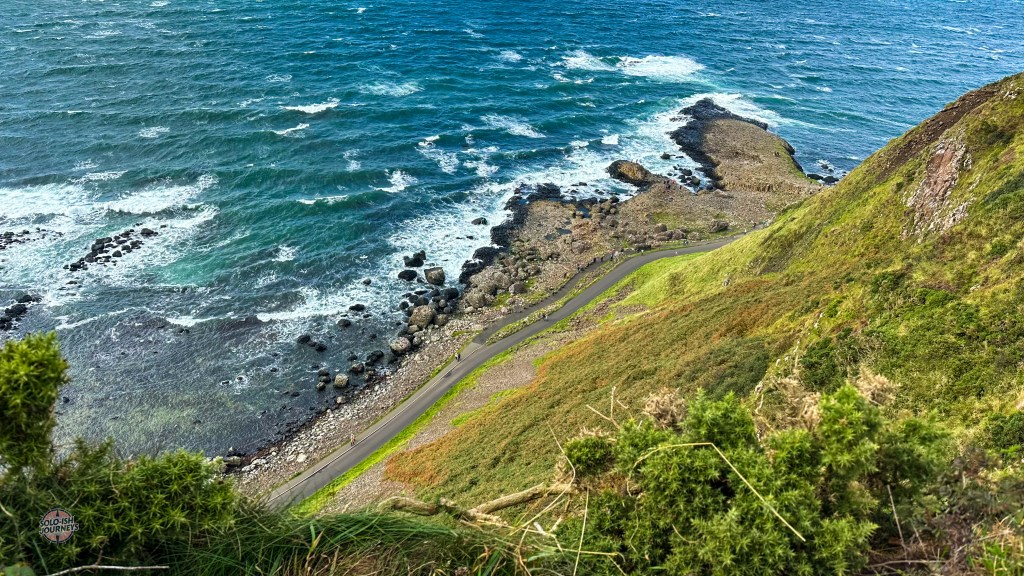
I didn’t know what to expect, but the Giant’s Causeway quickly became one of my favorite places. The walk from the visitor center was long and scenic, with misty air, dramatic cliffs, and endless photo ops. At first it was cold, wet and windy, but then the sun broke through, and the whole landscape seemed to glow.
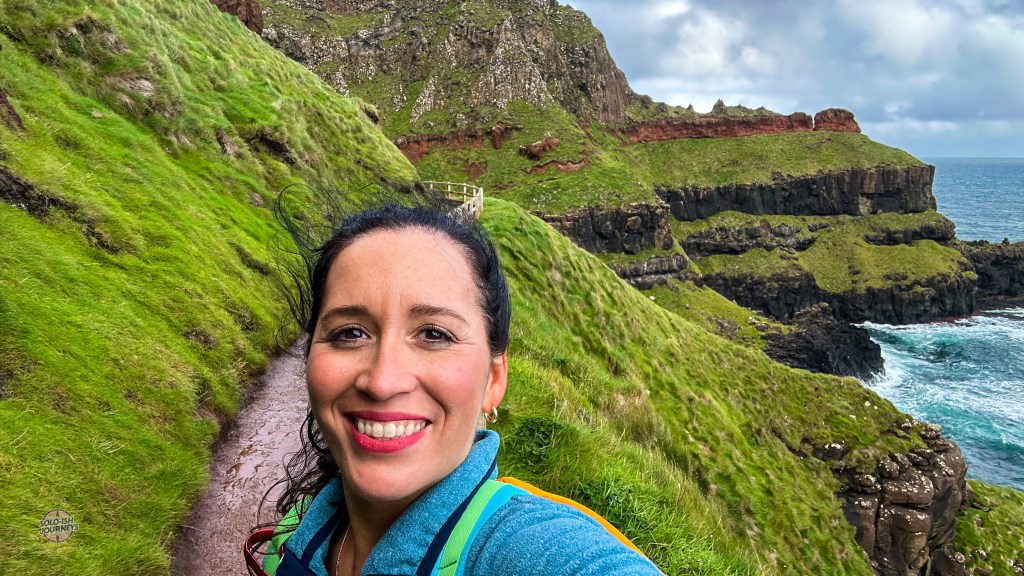
I tried to balance snapping photos with simply stopping to look – because no camera can capture the feeling of standing there, wind whipping your hair, staring at something both ancient and otherworldly.
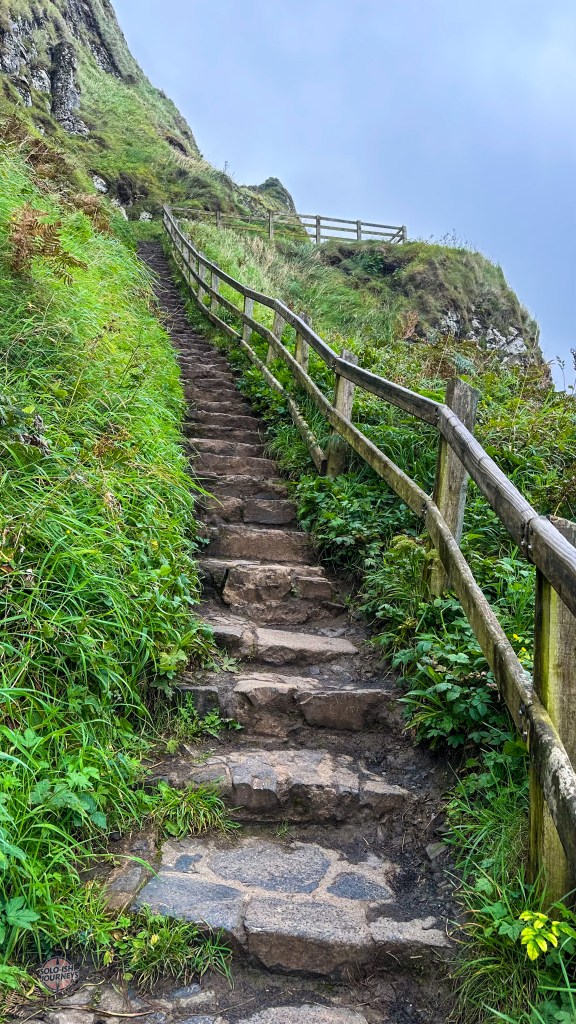
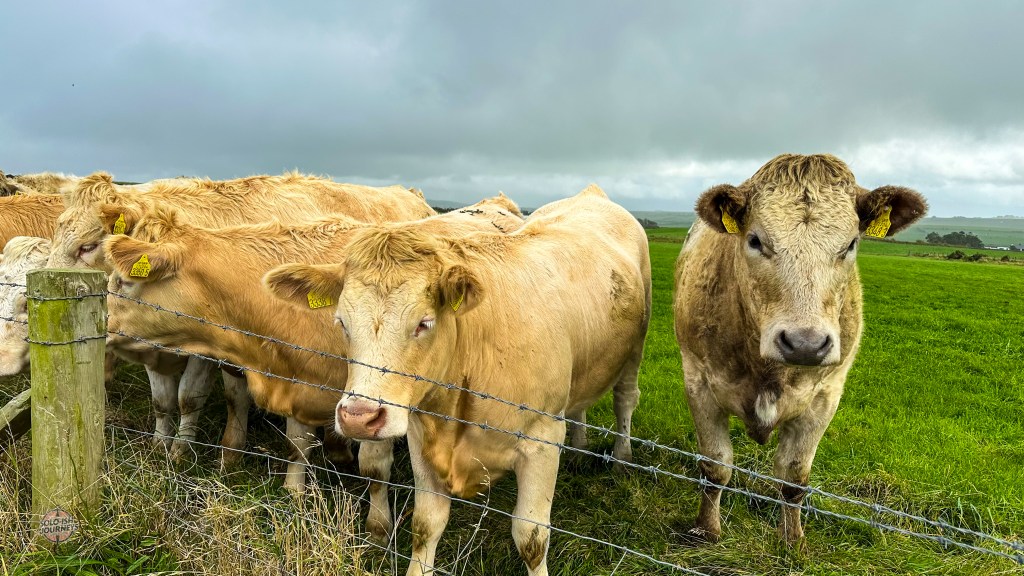
Of course, in true Amanda fashion, I managed to turn a simple walk into an accidental workout. Instead of taking the shuttle back, I chose the “alternate route.” Spoiler: it was not shorter. It included 162 steep steps, literal gale‑force winds that had me clinging to the rails, and a surprise herd of cows at the top. Naturally, I stopped for cow selfies.
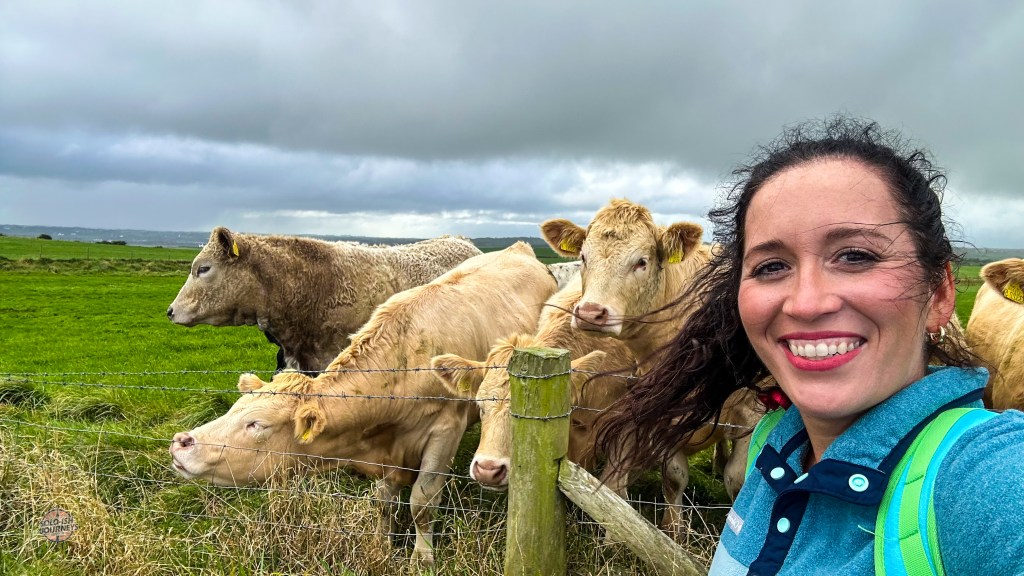
By the time I realized I was running late, I had to jog – yes, jog – in boots, against the wind, back toward the bus. I arrived sweaty, breathless, and five minutes late. Honestly, it could have been worse.
Dinner with New Friends
Back at the hotel, I debated ordering in and collapsing into bed. But one of the best parts of “solo‑ish” travel is the gentle peer pressure of new friends. A few people convinced me to join them for dinner, and I’m glad I did.
We hopped on a city bus to a local spot called Horatio Todd’s, where the food was hearty, the atmosphere lively, and everyone left happy. It was the perfect way to end a day that had been equal parts history lesson, myth, and adventure workout.

Reflections: Solo‑ish Travel at Its Best
Looking back, this day captured exactly why I love traveling this way. On my own, I might have skipped the pub or eaten dinner in my room. With a group, I had my first Guinness, laughed over dinner with new friends, and pushed myself to climb 162 steps I didn’t technically need to climb.
Traveling “solo‑ish” means you get the freedom to choose your own path, but also the encouragement to step outside your comfort zone. And sometimes, that’s where the best stories come from.
Final Thoughts
From the leaning clock tower of Belfast to the hexagonal stones of the Giant’s Causeway, my first full day in Ireland was packed with history, myth, and a little chaos (the jogging‑in‑boots kind). It was the kind of day that reminds me why I stopped waiting for the “perfect” time or the “perfect” travel buddy.
Ireland had already surprised me, challenged me, and charmed me – and this was only day one.
Stay tuned, because the Wild Atlantic Way had plenty more in store.
FAQ: Belfast & Giant’s Causeway Travel Day
Is Belfast worth visiting on a trip to Ireland? Absolutely. Belfast is a city that wears its history on its walls, literally. From murals about The Troubles to the shipyard where the Titanic was built, it’s a place where past and present collide. A walking tour with a local guide is the best way to understand its layered story.
What is The Troubles in Northern Ireland? The Troubles was a decades‑long conflict (late 1960s–1998) rooted in political and national divisions. It left a lasting mark on Belfast, and while peace has held since the Good Friday Agreement, reminders are still visible in murals, memorials, and conversations.
Where is the Giant’s Causeway, and how do you get there? The Giant’s Causeway is on the north coast of Northern Ireland, about an hour and a half from Belfast by car or coach. Many group tours include it as a day trip, often paired with other stops like Dunluce Castle or the Dark Hedges.
What makes the Giant’s Causeway special? It’s a UNESCO World Heritage Site made up of around 40,000 interlocking basalt columns formed by volcanic activity 50–60 million years ago. Most are hexagonal, creating a natural “staircase” into the sea. Add in the legend of Fionn McCool, and it’s both science and story rolled into one.
How hard is the walk at the Giant’s Causeway? The main path from the visitor center is long but manageable. If you want a workout, take the alternate cliffside route – it includes 162 steep steps, strong winds, and (if you’re lucky) a herd of cows. Shuttle buses are available if you’d rather skip the climb.
Do you need tickets for the Giant’s Causeway? The stones themselves are free to access, but the visitor center (with exhibits, restrooms, and parking) requires a ticket. Most tours include entry.
Does Guinness really taste better in Ireland? Many people swear it does – creamier, smoother, fresher. I gave it a fair shot in Belfast, but as a non‑beer drinker, it still tasted like… beer. Worth trying at least once for the experience.
What’s the best way to end a day in Belfast? Find a cozy pub or restaurant with new friends. I ended up at Horatio Todd’s, where the food was hearty and the atmosphere lively. Sharing a meal is the perfect way to wrap up a day of history, cliffs, and chaos‑method stair climbing.
View more highlights from the trip. Click to expand the images.



 Solo-ish Journeys
Leave a comment