
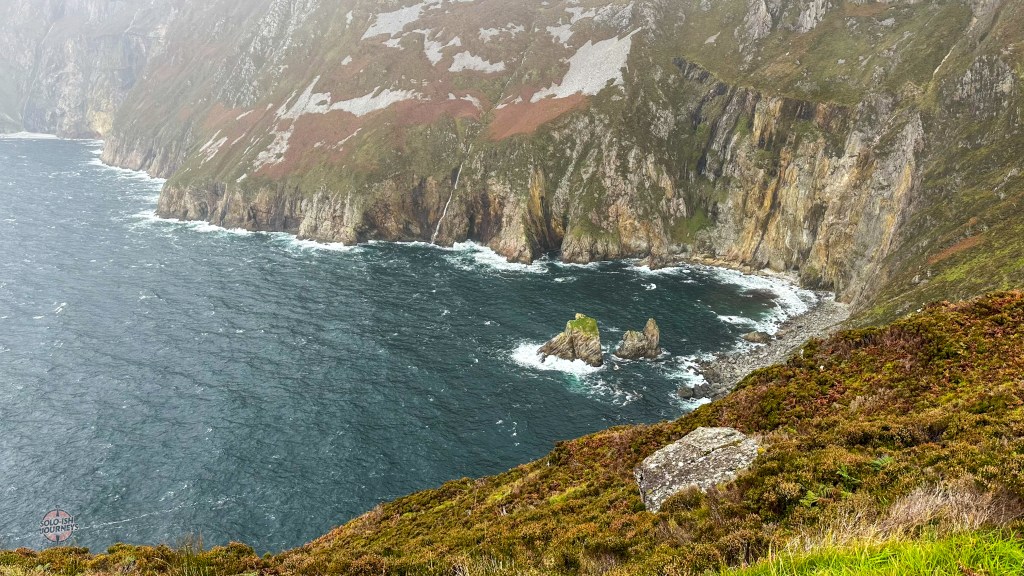
If you’ve been following along, you know my Ireland adventure has already taken me through Belfast, Derry, and Donegal. But if you’re new here – welcome! This post stands on its own, so you can jump right in. Today’s story takes us west to the Slieve League Cliffs, one of the most dramatic natural wonders in Europe, and onward to a day filled with history, language, tweed, and a little chaos‑method magic.
This post may contain affiliate links. That means if you click and make a purchase, I may earn a small commission – at no extra cost to you. As an Amazon Associate, I earn from qualifying purchases.
Slieve League: Ireland’s Wild Edge
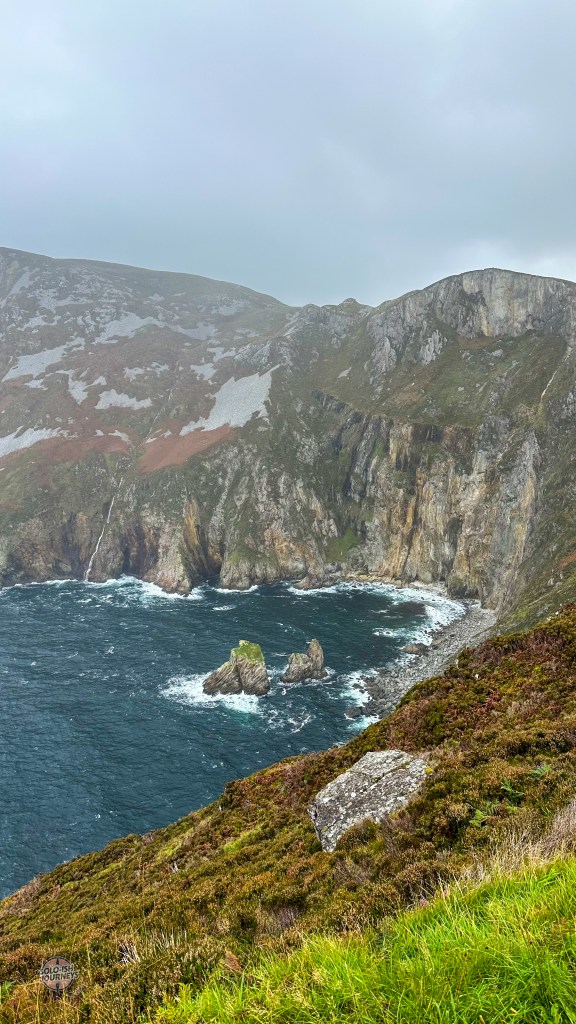
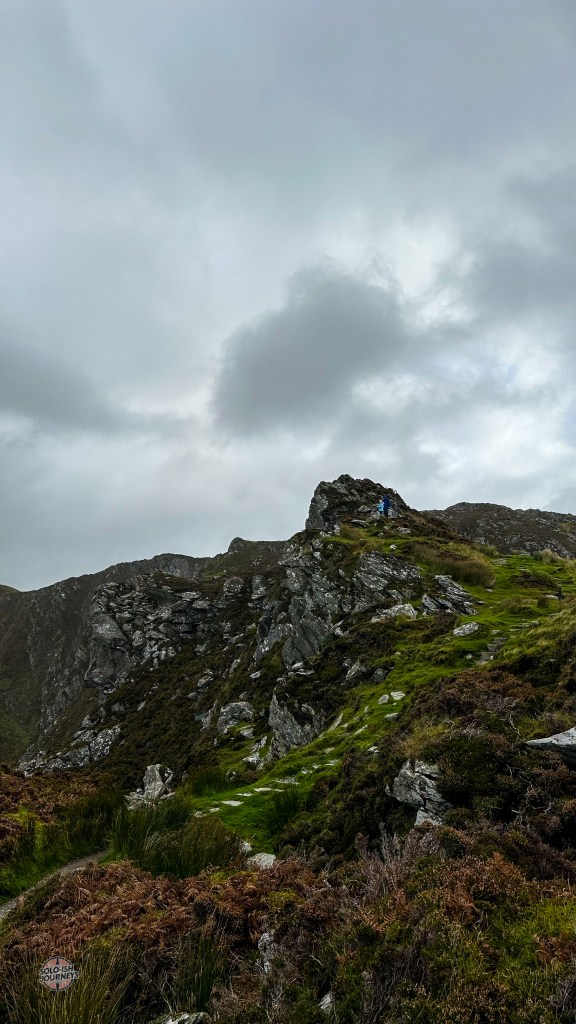
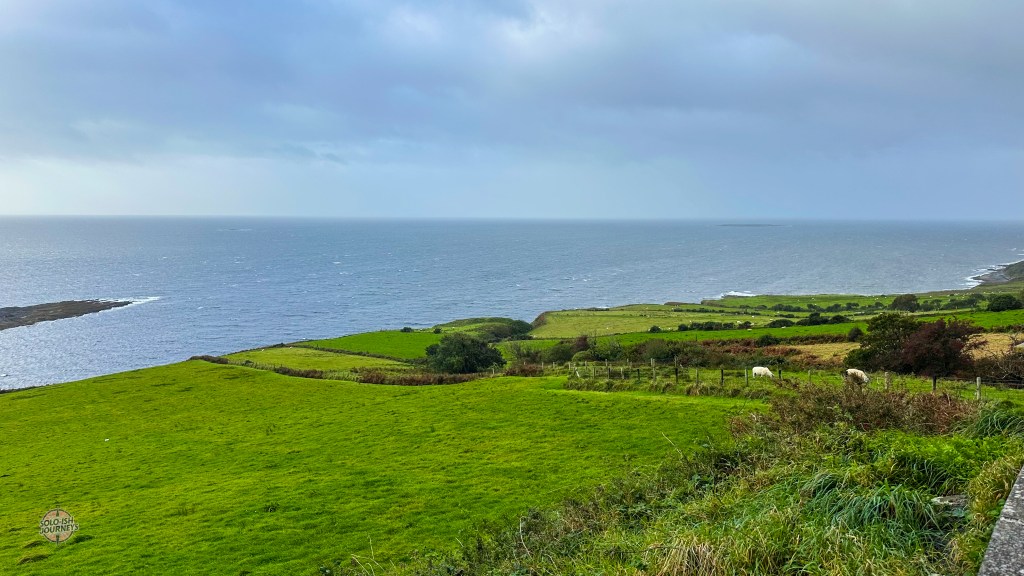
This morning we headed west to see the Slieve League Cliffs (Sliabh Liag) in County Donegal. Rising nearly 600 meters (1,972 feet) above the Atlantic, they are among the highest sea cliffs in Europe – almost three times taller than the Cliffs of Moher and nearly twice the height of the Eiffel Tower. Unlike the more famous Moher, Slieve League feels raw and untamed, with fewer crowds and a sense that you’re standing at the very edge of the world.
We met our local guide, Eunin, who grew up here. On the shuttle ride up, he shared stories of the cliffs, his childhood, and the history of this rugged coastline. When we arrived, he pointed out a short hike we could do. With less than an hour to explore, some of us (myself included) took off right away. There were steps to climb, views to chase, and – ugh – more steep stone stairs.
Hiking the Cliffs (and Battling the Wind)
I climbed up the many stone steps carved into the cliffside, dodging sheep droppings and bracing myself against the gale‑force winds. Ireland’s wind is no joke. At times it nearly knocked me off my feet, forcing me into a wide‑legged stance just to stay upright. My hair? Let’s just say it was going every direction at once, no matter how I tried to tame it.

Travel Tip: Don’t Forget an Ear Warmer
One thing that saved me was my trusty ear warmer headband. (I got it years ago, but it’s something like this) It wasn’t just about keeping me warm – it acted like a shield, blocking the wind from cutting straight into my ears. On the one day I forgot to wear it, I learned my lesson quickly; within minutes, my ears actually ached from the cold gusts. Never again. It’s such a small piece of gear, but it made a huge difference in keeping me comfortable (and sane) while battling the elements.
At one point, I stopped to catch my breath and soak it all in. The Atlantic stretched endlessly below, waves crashing against the cliffs. A waterfall tumbled toward the sea – except the wind was so strong it blew the water back upward before it could reach the ocean. Nature showing off, Irish‑style.

I wasn’t alone for long. A few of my group caught up, and we took turns snapping photos of each other. That’s the beauty of solo‑ish travel: I get the freedom to wander on my own, but I also have people nearby to say, “Hey, can you take my photo?” I’ve also gotten pretty good at setting up my phone with a Bluetooth remote for those “look, I’m on top of the world” shots.
A Souvenir Made of Ireland
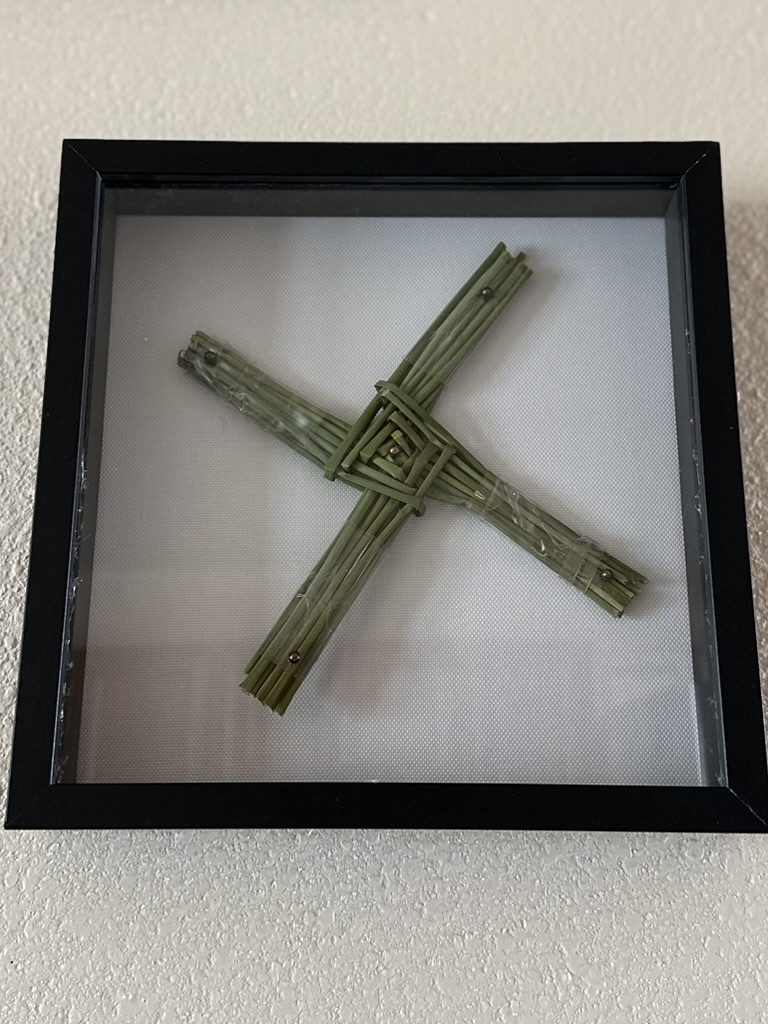
Back at the shuttle, Catherine (our tour guide) surprised me. Earlier, I had asked her about a symbol I kept seeing around Ireland and even in our coach: a woven cross made of grass. She explained it was a St. Brigid’s Cross, traditionally crafted from rushes or straw. Its origins go back to pre‑Christian Ireland, where the goddess Brigid was associated with fire, fertility, and poetry. Later, the symbol was adopted into Christianity, tied to St. Brigid of Kildare, one of Ireland’s patron saints. Families would hang the cross above their doors for protection.
While I was hiking, Catherine had gathered some stalks to show me how to make one. But before she could, Eunin casually said, “Oh, I can make it real quick.” And he did. In minutes, he handed me a handmade St. Brigid’s Cross. It wasn’t something I could buy in a shop – it was made in Ireland, of Ireland. It’s easily my favorite souvenir from the trip, and Catherine probably had no idea how much it meant to me.
Songs, Stones, and WWII Secrets
On the ride back down, Eunin pulled out his guitar and sang a song he’d written about his father. His voice carried over the hum of the shuttle, blending with the wild landscape outside. Then he pointed out something unusual: stones laid out in the shape of numbers on the ground.

During World War II, Ireland was officially neutral, but it allowed Allied pilots to cross a narrow corridor of airspace. To help them navigate, the Irish Coast Watching Service built massive stone markers spelling out “ÉIRE” along the coastline, each numbered to correspond with lookout posts. These signs told pilots they were flying over neutral Ireland – and also served as navigational aids for American planes crossing the Atlantic. Seeing one of those markers in person was like stumbling across a hidden chapter of history carved into the land.
Warming Up at the Visitor Center
Back at the visitor center, I browsed the shop for souvenirs before heading to the café. I ordered a bagel piled with vegetables and pesto, plus a steaming cup of soup to thaw out after the wind. And because I’m me, I grabbed a coffee to go – and maybe a sweet treat for the bus ride.
A Crash Course in Irish
Our next stop was a local Irish college. I had no idea what to expect (chaos method in action), but we were greeted by a shy doodle dog who peeked at us before retreating to his bed. Inside, we had an hour‑long crash course in the Irish language (Gaeilge).
We learned greetings like “Dia duit” (hello, pronounced “jee‑a ditch”) and “Cad é mar atá tú?” (how are you?). The pronunciations were nothing like they looked on paper, and they vary by region. My favorite part? The handout included the phrase “Tá póit agam” – translation: “I have a hangover.”
Tweed, Irish Coffee, and a Bit of Glamour
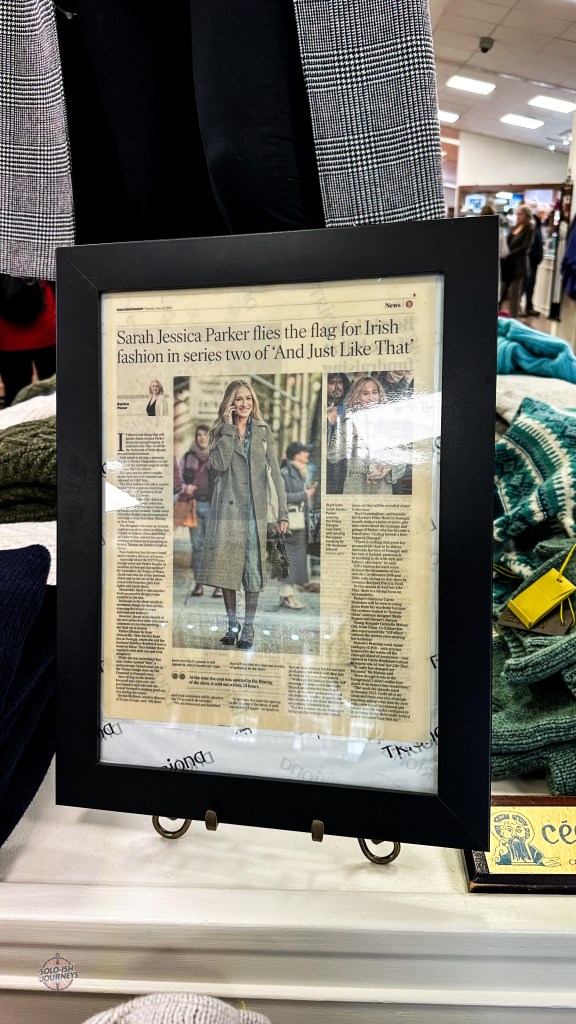
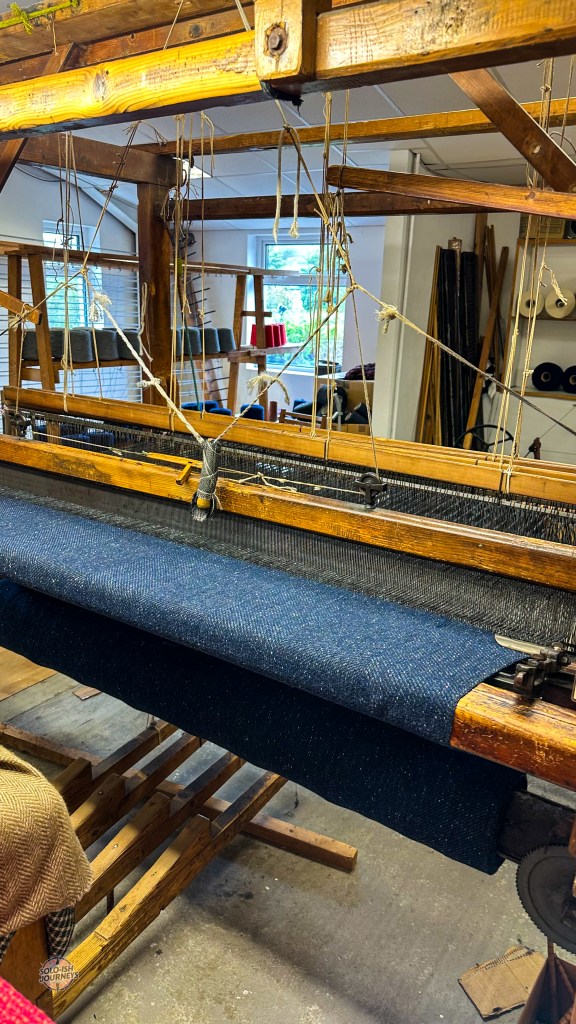
From there, we visited a local shop specializing in tweed clothing and accessories. We were welcomed with Irish coffee (yes, please) and a demonstration of the loom in action. The shop was filled with coats, sweaters, hats, and jewelry. The staff proudly told us that Sarah Jessica Parker had purchased a coat here and even wore it in an episode of And Just Like That. Understandably, they were thrilled – and honestly, the pieces were gorgeous enough to deserve the spotlight.
A Quiet Evening in Donegal
By the time we returned to our hotel, I was exhausted. Dinner was on our own, and while some of the group ventured into town, I opted to stay in. The winding roads had left me a little carsick, and I just wanted to rest. I curled up with my book, only to discover that some of the characters were from Sligo – exactly where I was heading the next day. Travel serendipity at its finest.
Later, hunger nudged me downstairs for a simple bowl of soup at the hotel restaurant. No overpriced room service for me. Just a quiet, cozy end to a day that had been equal parts wild, cultural, and deeply personal.
Reflections: The Solo‑ish Way
This day captured everything I love about solo‑ish travel. I had moments of solitude on the cliffs, laughter with my group, cultural immersion in language and craft, and even a handmade souvenir that tied me to Ireland in a way no shop purchase could.
Slieve League reminded me of nature’s raw power. The Irish language class reminded me of the importance of preserving culture. And the tweed shop reminded me that travel is also about the small, human connections – whether it’s a loom demonstration or a coat worn by a celebrity.
FAQ: Visiting Slieve League and Donegal
Where are the Slieve League Cliffs? They’re located in County Donegal, on Ireland’s Wild Atlantic Way. The cliffs rise nearly 600 meters above the Atlantic, making them some of the highest in Europe.
How do you get to Slieve League? Most visitors park at the Slieve League Visitor Center and take a shuttle bus to the viewing area at Bunglass Point. From there, you can hike various trails depending on time and fitness level.
What is St. Brigid’s Cross? A traditional Irish symbol woven from rushes or straw, associated with both the Celtic goddess Brigid and St. Brigid of Kildare. It’s believed to protect homes from harm and is still made on February 1st, St. Brigid’s Day.
What were the WWII ÉIRE markers? During World War II, Ireland built large stone signs spelling “ÉIRE” along its coast to declare neutrality and help Allied pilots navigate. Many can still be seen today.
Is Donegal worth visiting? Absolutely. Donegal offers dramatic landscapes, rich history, traditional crafts, and fewer crowds than other parts of Ireland. It’s a must‑see on the Wild Atlantic Way.
A few more glimpses from the day – click to step into each scene.





 Solo-ish Journeys
Leave a comment