
At this point in the trip, you can safely assume I started every morning the same way: breakfast at the hotel. It became a comforting little ritual – coffee, something carb‑heavy, and a few quiet minutes before the day kicked into full gear. And on this particular morning, we had a full day ahead of us in Munich, one of Germany’s most historic and culturally rich cities.
A Driving Tour Through Munich’s History
We kicked things off with a driving tour led by a local guide – the kind of guide who somehow manages to weave centuries of history into stories that feel alive. As we drove through Munich, he pointed out landmarks, architectural details, and buildings tied to major moments in the city’s past.
One of the stops that stood out was a building where Adolf Hitler once had an office during the early rise of the Nazi Party. It was jarring to see something so historically heavy sitting quietly among modern streets and everyday life. Munich carries its history openly – not to glorify it, but to acknowledge it, learn from it, and ensure it’s never forgotten.
Nymphenburg Palace – Bavaria’s Baroque Beauty
Our next stop was Nymphenburg Palace, a sprawling Baroque palace that once served as the summer residence of the Bavarian royal family. Construction began in the 1600s, and over the centuries it expanded into a massive complex complete with ornate halls, manicured gardens, lakes, and smaller pavilions scattered across the grounds.
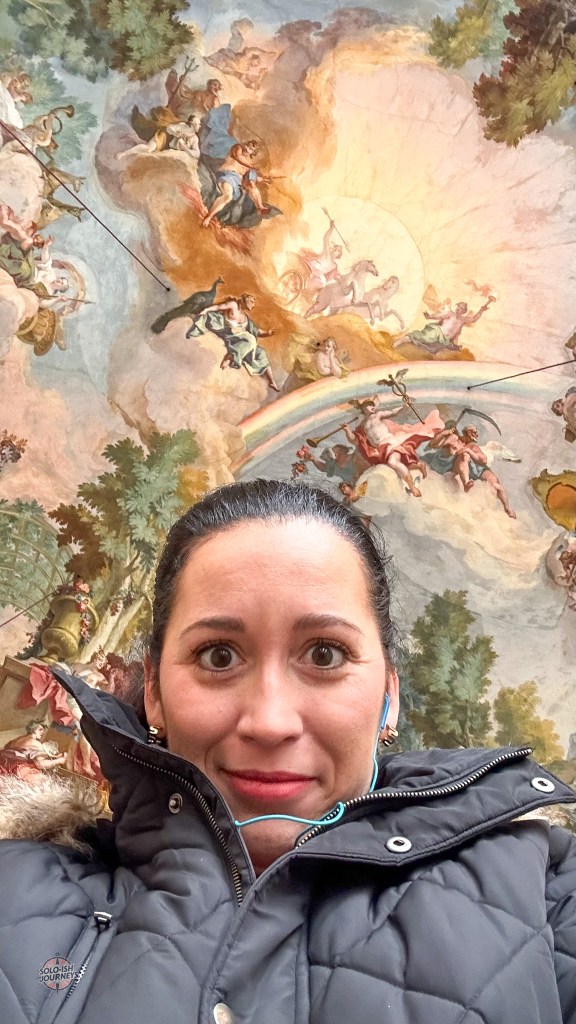
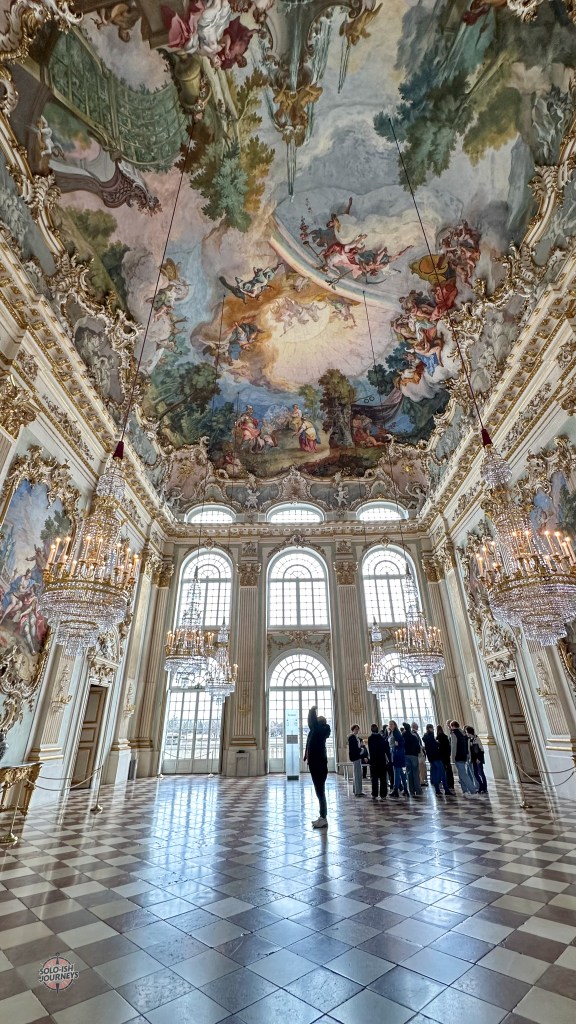
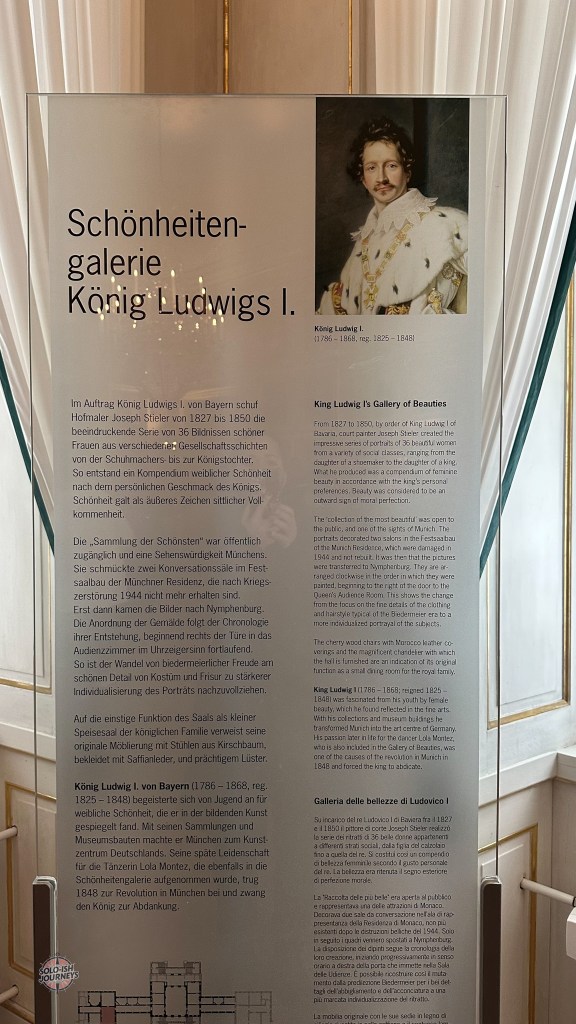
Walking up to it felt like stepping into a period drama. The palace stretches wide across the landscape, its white façade and symmetrical wings reflected in the water out front. Inside, the rooms are filled with frescoes, gilded details, and portraits of Bavarian rulers – including one that ties directly into one of the most interesting stories of the day.
Ludwig I & Lola Montez – The Scandal That Shook Bavaria
Our guide shared the story of King Ludwig I of Bavaria and Lola Montez, a woman whose life was equal parts ambition, scandal, and chaos.
Lola Montez wasn’t actually Spanish, though she claimed to be. She was born in Ireland, reinvented herself as a Spanish dancer, and eventually made her way into European high society. When she met Ludwig I, he became completely infatuated with her – so much so that he granted her titles, influence, and a level of access that outraged the public.
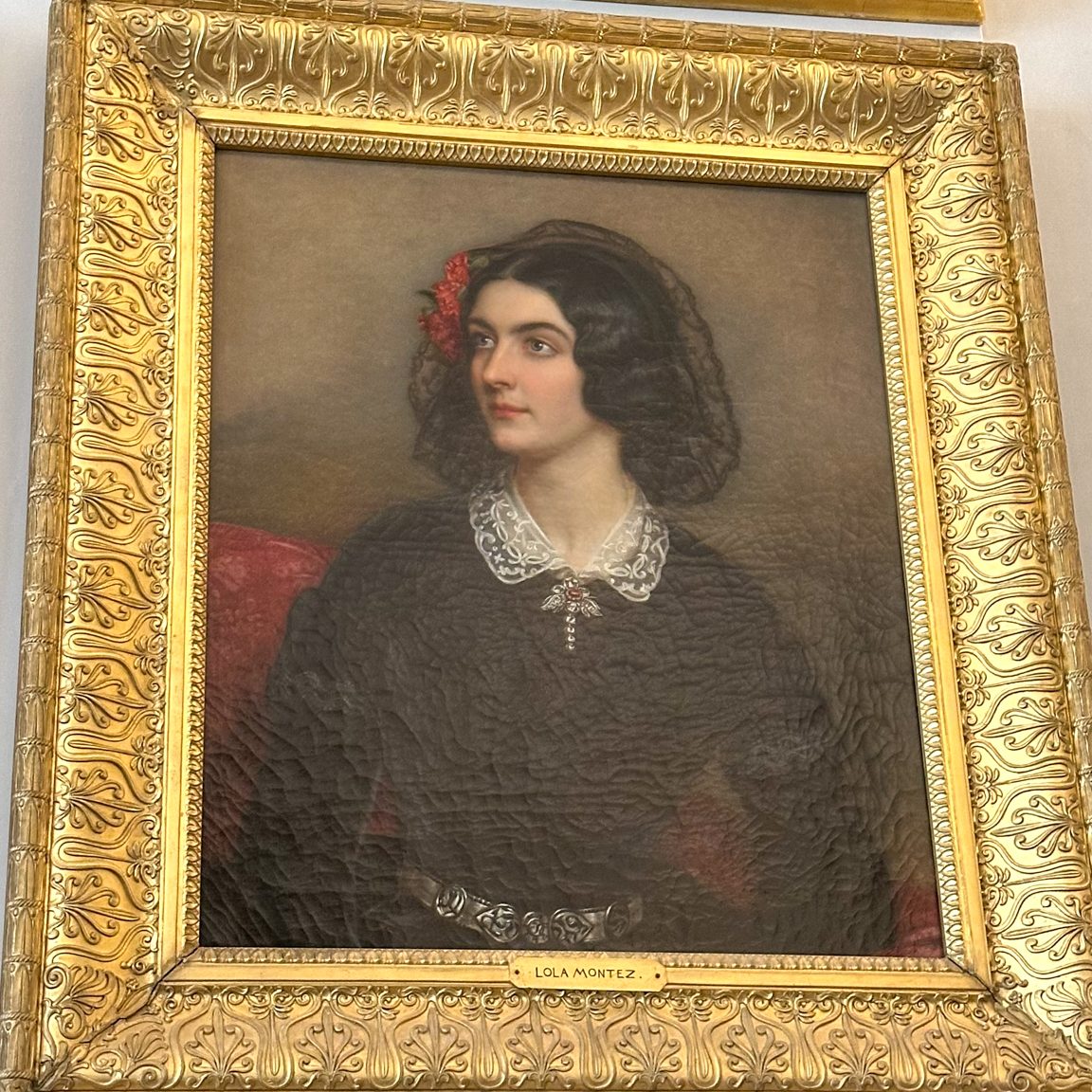
Her presence contributed to political unrest, and eventually Ludwig abdicated the throne. Lola fled Bavaria, continuing her dramatic life across Europe and the United States.
And yes – she’s the inspiration behind the famous song lyric: “Her name was Lola…” (You know the rest.)
It’s wild how a single person can leave such a mark on history, and hearing the story while standing in the palace where Ludwig once lived made it even more fascinating.
Into the Heart of Munich – And the Glockenspiel Surprise
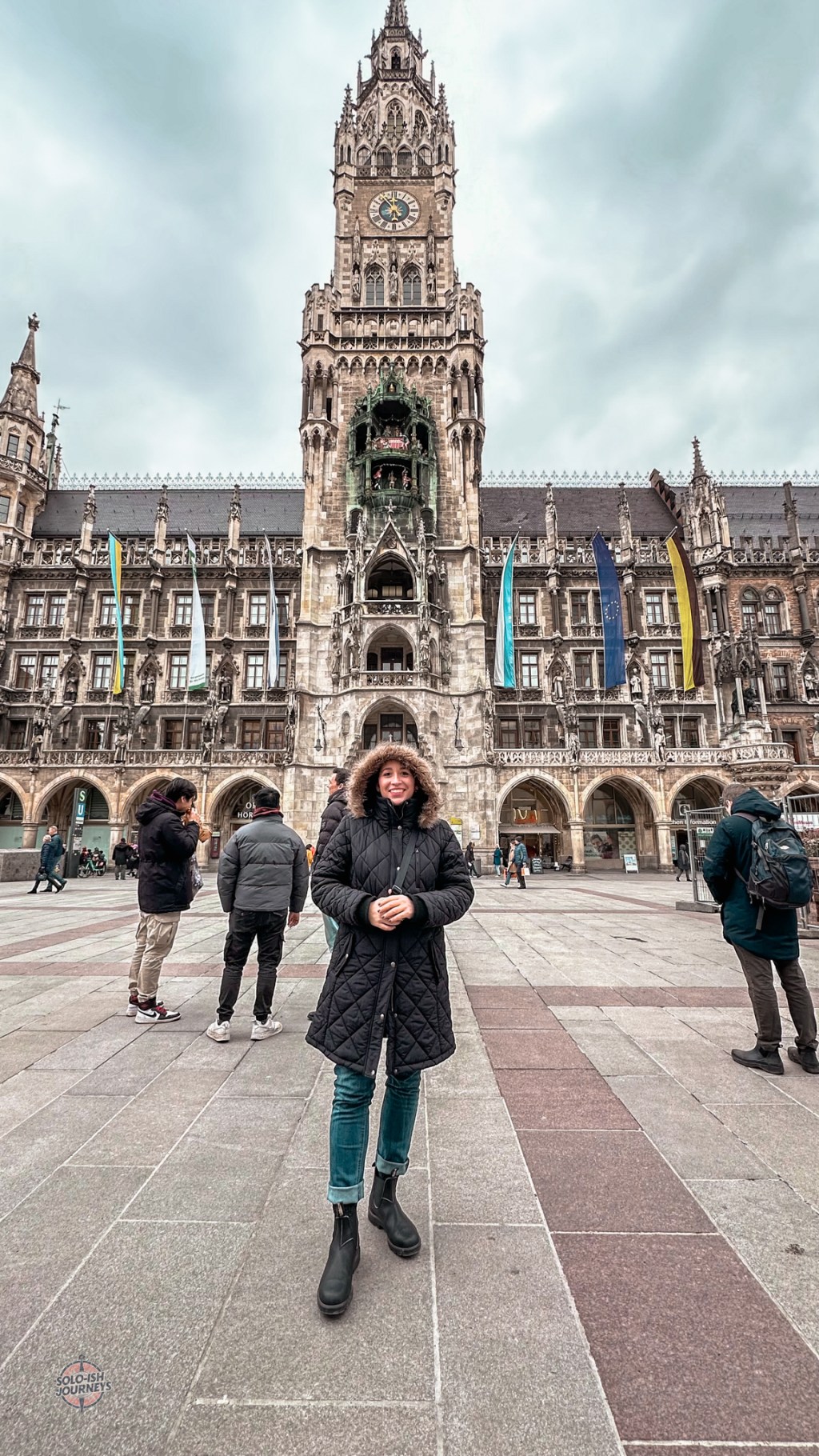
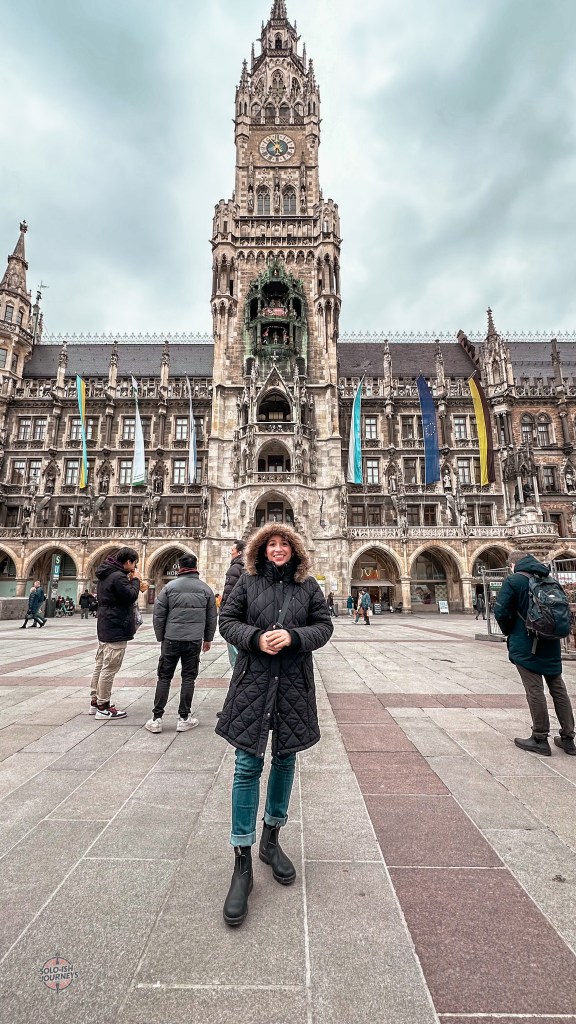
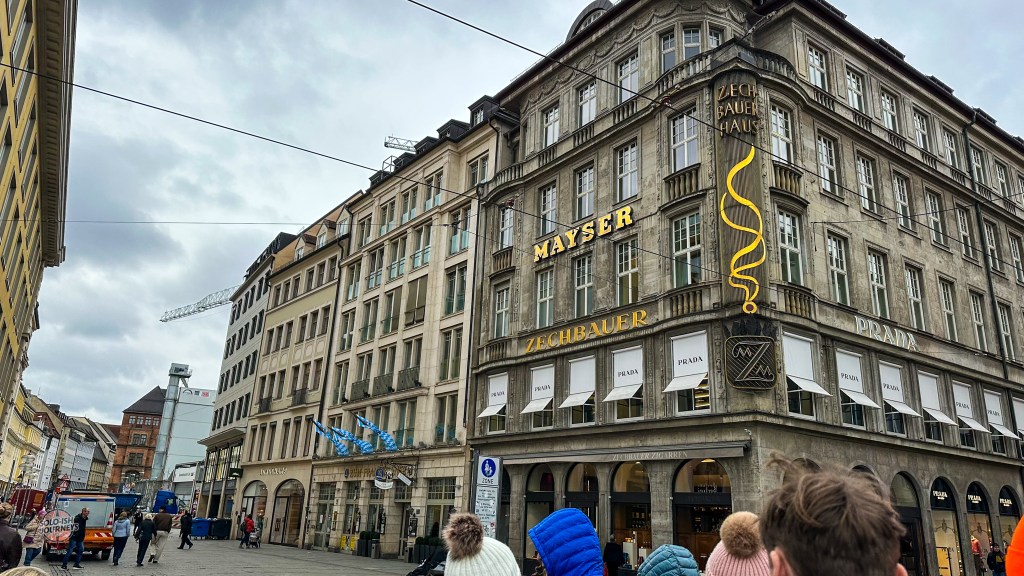
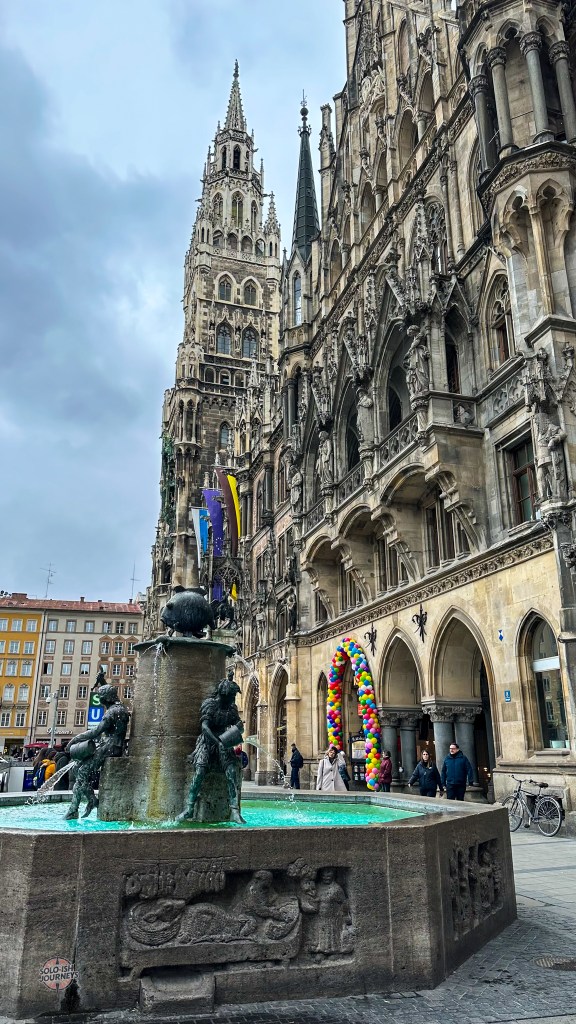
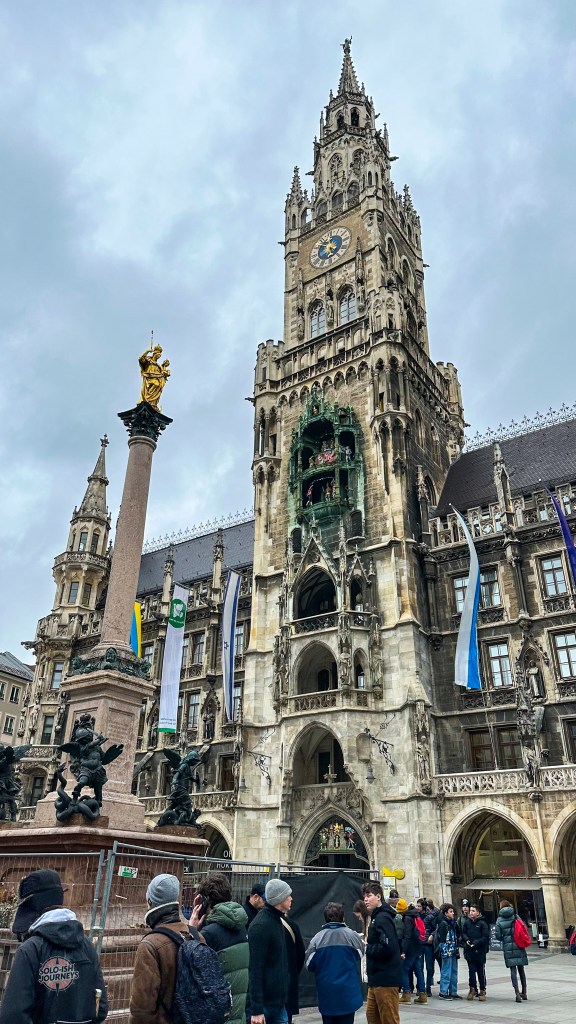
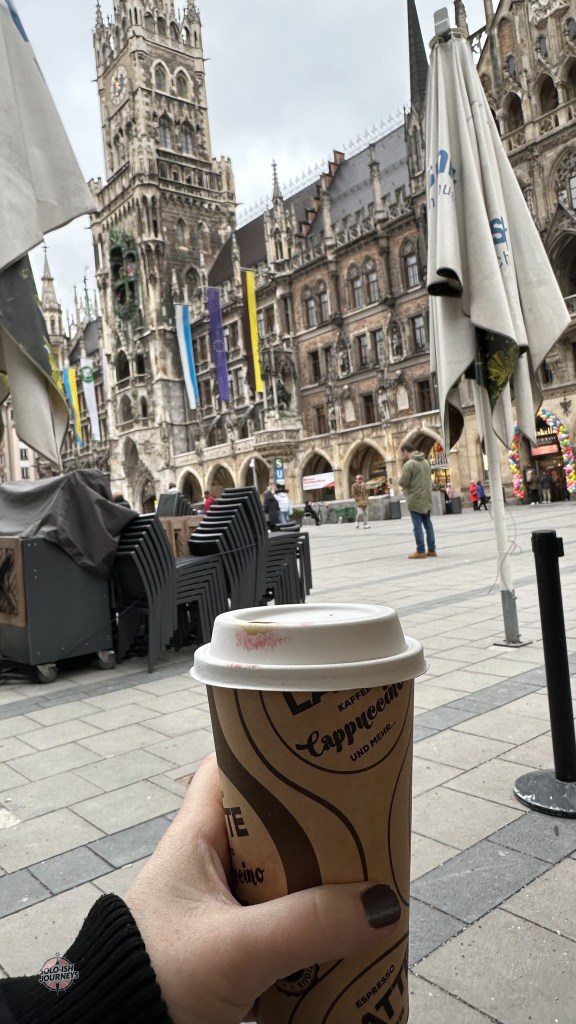
After exploring the palace, we headed into central Munich for a walking tour. We wandered through the city streets until we reached Marienplatz, the main square and home to the famous Glockenspiel.
The Glockenspiel is part of the New Town Hall and dates back to the early 1900s. Every day, its life‑sized figurines reenact historical Bavarian events – a royal wedding, a jousting match, and a traditional dance. It’s charming, quirky, and very Bavarian.
We arrived just in time to watch the show, which was perfect timing… even though I had no idea that’s what we were doing. This was one of those moments where not studying the itinerary paid off. I was standing there thinking, “What are we doing? Oh cool – a giant cuckoo clock!” Sometimes the chaos method works.
Free Time in Munich – Markets, Coffee, and a Fancy Grilled Cheese
With some free time before our next meetup, I wandered through Munich on my own. I ended up stumbling into a sort of farmers market – stalls filled with produce, flowers, cheeses, meats, and all kinds of local treats. It was lively and colorful, the kind of place where you can feel the heartbeat of a city.
I grabbed a fancy grilled cheese for lunch (10/10, would eat again), then continued exploring until it was nearly time to go. Before heading back, I stopped at a café for dessert and coffee and took a few minutes to just sit and soak in the atmosphere.
These little pauses became some of my favorite moments of the trip – the chance to breathe, observe, and enjoy being somewhere new.
The Solo‑ish Travel Struggle: Photos
This feels like the right place to insert a universal solo‑ish travel struggle: photos.
I can take great photos of other people. Truly. I’ve got the angles, the framing, the lighting – all of it. But when it comes to finding someone who can take a decent photo of me? The universe has not blessed me.
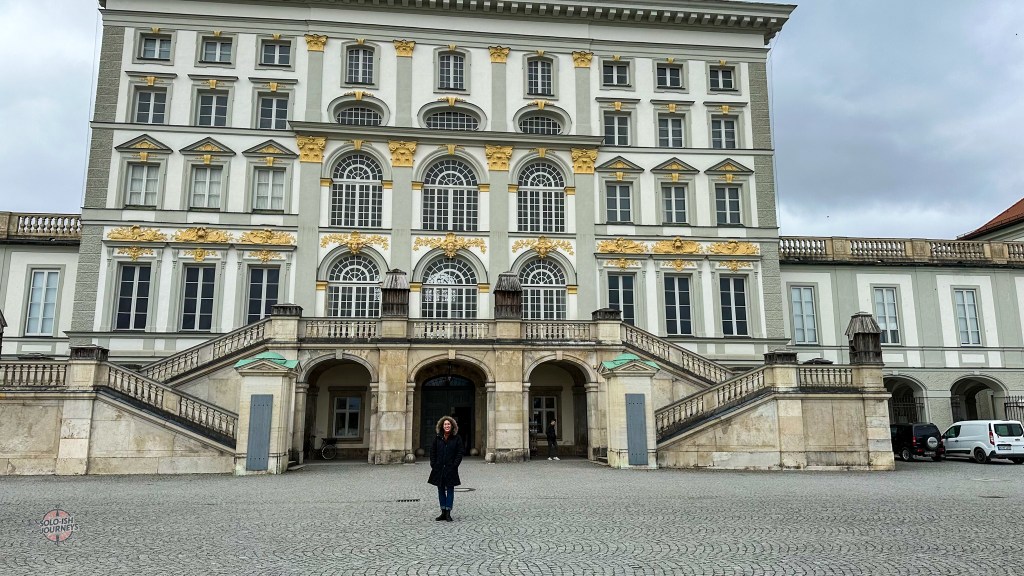
So I end up with poorly framed shots, awkward angles, or selfies. If anyone has cracked the code on getting great photos in crowded places without risking your phone being swiped, please share your wisdom.
Dachau – A Somber, Necessary Experience
Next up was an optional excursion, though I think nearly everyone chose to go: Dachau Concentration Camp Memorial Site.
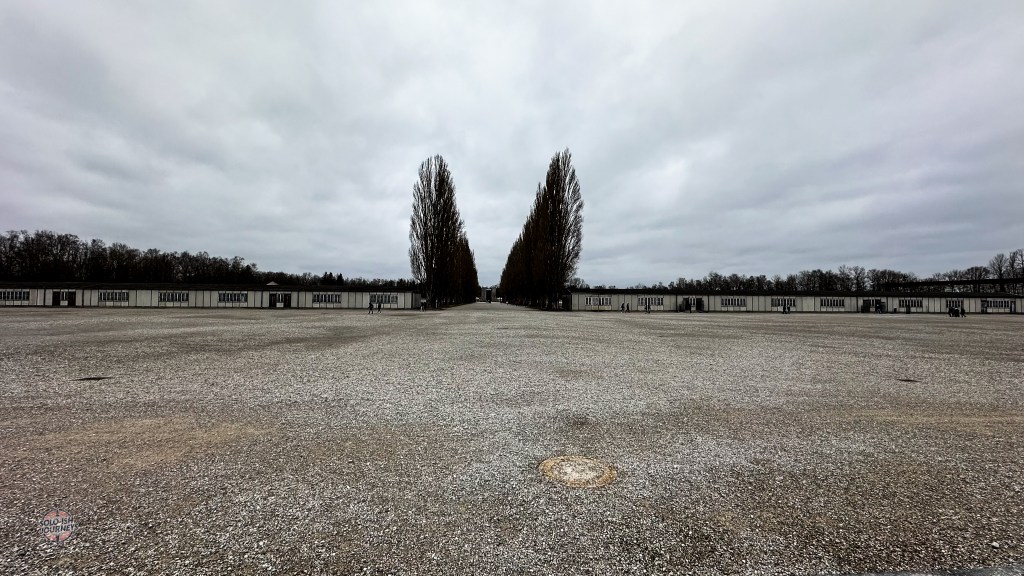
Dachau was the first concentration camp established by the Nazi regime in 1933. It became a model for many others that followed and was the site of immense suffering, forced labor, medical experiments, and the deaths of tens of thousands of prisoners.
The weather that day was cold, gray, and heavy, which felt fitting for such a somber place.
We were given time to explore at our own pace, and I chose to walk alone. It felt like the kind of place you experience quietly, without chatter or distraction. There was an indoor gallery with photos, documents, and detailed historical information, but with limited time, I focused on the grounds.
Walking through Dachau was sobering. Heartbreaking. Important. I couldn’t help but think about the lives lost, the cruelty endured, and the weight of what happened there. The memorial does an incredible job of preserving history in a way that ensures we don’t forget – not here, not anywhere.
I don’t know what else to say except that I felt honored to stand there and remember those souls in person.
A Quiet Evening – Aldi Adventures & Hotel Dinner
After Dachau, we returned to the hotel for a free evening. By dinner time, I was physically and emotionally drained, so I opted to eat at the hotel restaurant – which turned out to be great.
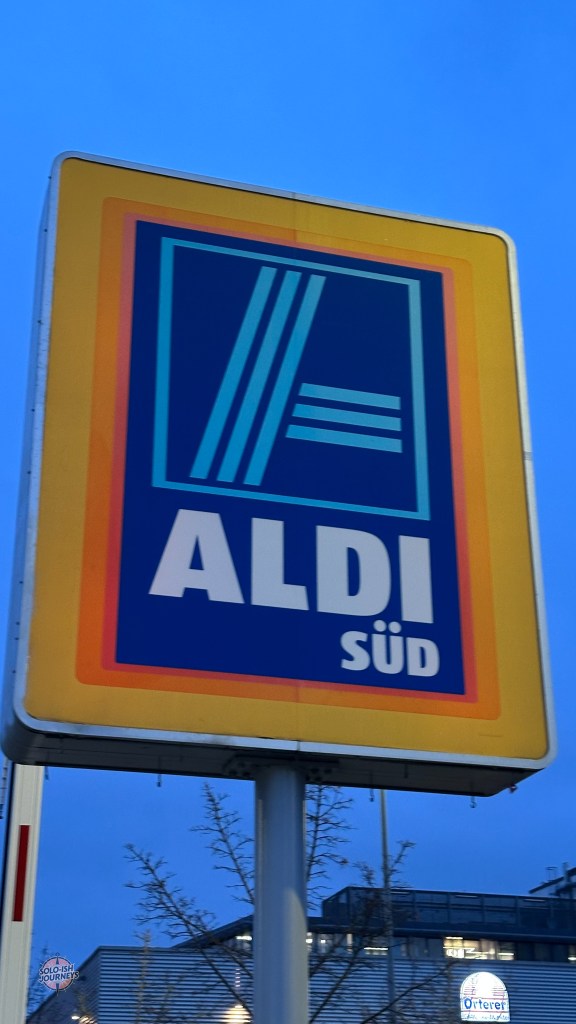
Before that, though, I walked a few blocks to a local Aldi. I don’t know why, but I had been weirdly excited to see a German Aldi in person. And honestly? It was almost identical to the ones in the States, which I guess speaks to the consistency of the brand. I bought an Aldi shopping bag as a souvenir and headed back.
The Group Travel Trade‑Off
One thing about group travel: you don’t get to pick the hotel. I’m totally fine with that – it’s part of the convenience – but it does mean the hotels are often farther from the main attractions than you’d ideally want.
We were about a 30‑minute taxi ride from downtown Munich, so going back out would’ve meant an hour round‑trip. A few people from our group did go back into the city and ended up at a brewery, meeting locals and having a great time. Not really my jam, but I loved hearing their stories.
That’s another perk of group travel – even when you stay in, you still get to live vicariously through everyone else.
FAQ: Visiting Munich, Nymphenburg, and Dachau
Q: Is Nymphenburg Palace worth visiting? A: Absolutely. The palace and gardens are stunning, and the history is fascinating.
Q: What is the Glockenspiel? A: A historic clock tower in Marienplatz that performs a mechanical show with life‑sized figurines several times a day.
Q: What is Dachau? A: Dachau was the first concentration camp established by the Nazi regime. Today it serves as a memorial and educational site.
Q: How long do you need at Dachau? A: Ideally 3–4 hours. You can see the grounds in less time, but the indoor exhibits are extensive.
Q: Is Munich walkable? A: Yes, especially the city center. Many major attractions are close together.
Q: What should I pack for a day like this? A: Comfortable shoes, layers, water, and tissues. Dachau can be emotionally heavy.
More Photos! Click to view.
 Solo-ish Journeys
Leave a comment