
Leaving Salzburg for our final stop – Vienna – felt both exciting and bittersweet. Salzburg had been such a dream, but I was ready to see what Austria’s capital had in store. The drive itself was peaceful, the kind of scenic route where you settle into your bus seat, sip something fizzy, and watch the landscape shift from alpine charm to imperial grandeur.
Speaking of fizzy – this was the moment I discovered Coke Zero Lemon in a can. I don’t know why this delighted me so much, but it absolutely did. Travel is made of tiny joys, and apparently one of mine is citrus‑flavored soda.
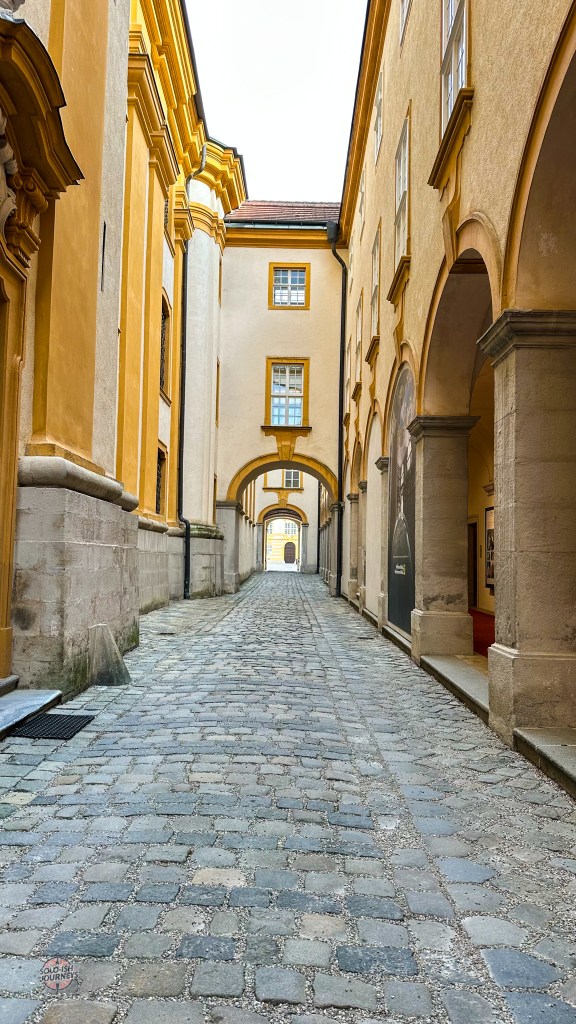
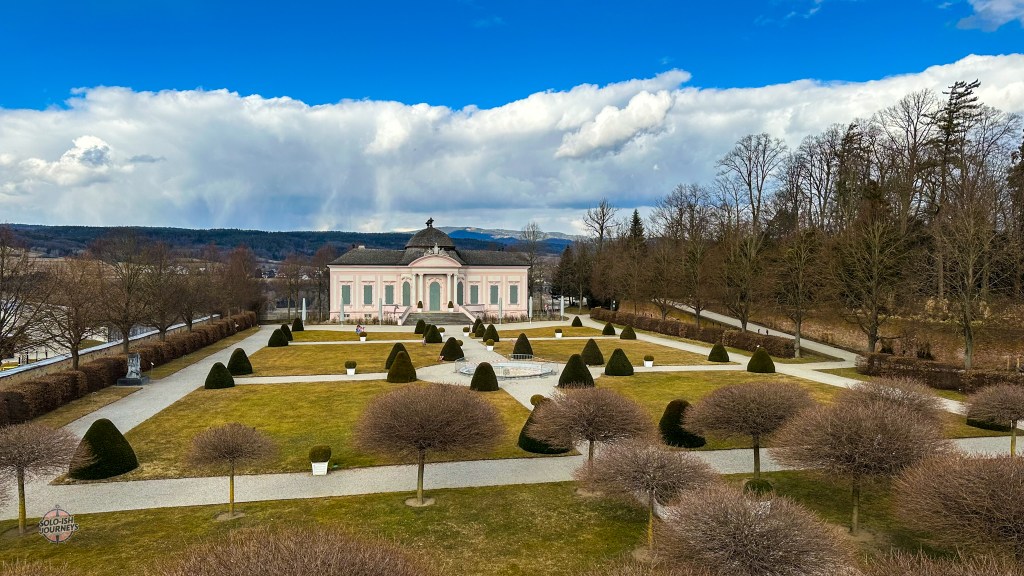
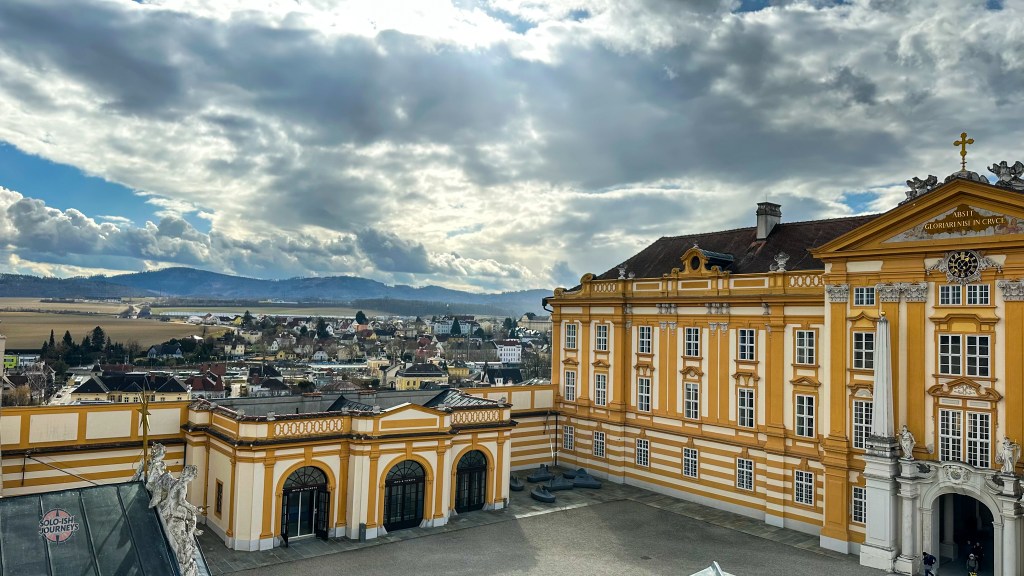
Our first major stop of the day was Melk Abbey, one of the most famous monastic sites in Europe. And honestly? It lived up to every expectation.
Exploring Melk Abbey: Baroque Brilliance Above the Danube
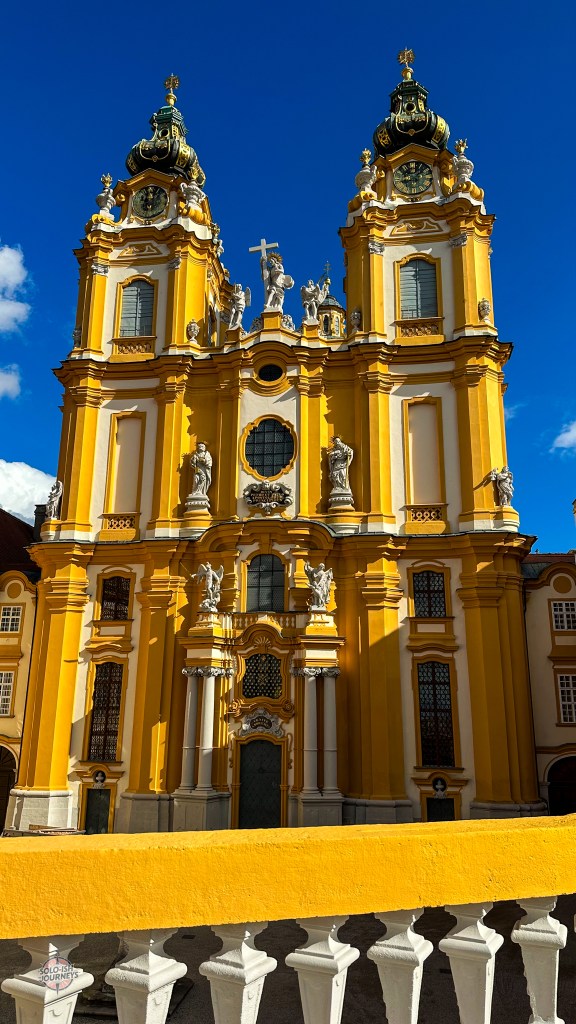
Melk Abbey (German: Stift Melk) sits dramatically on a rocky outcrop overlooking the Danube River, marking the western entrance to the Wachau Valley. It’s a Benedictine abbey founded in 1089, when Leopold II, Margrave of Austria, gifted one of his castles to the monks. Over the centuries, it became a major center of religion, culture, and education, even establishing a monastic school in the 12th century that still exists today.
The abbey is also home to the tomb of Saint Coloman of Stockerau and the remains of several members of the House of Babenberg, Austria’s first ruling dynasty.
But beyond the history, Melk Abbey is simply stunning.
It was a bright, sunny day – the kind of weather that makes Baroque architecture glow. We were able to explore both the exterior grounds and several interior spaces, which felt special because this is still a working abbey with active monks. (No monk sightings for us, though!)
A local guide met us and walked us through the complex, explaining the symbolism, the art, and the centuries of history layered into every hallway. But the moment that truly stuck with me was stepping into the library.
Imagine a room straight out of a fantasy novel: floor‑to‑ceiling bookshelves, gilded details, ancient manuscripts, and that warm, slightly dusty smell of old books. It felt like stepping into a movie set – except it was real.
We also visited the abbey church, a masterpiece of Baroque design. Gold everywhere, soaring ceilings, dramatic frescoes – the kind of place that makes you whisper without even realizing it.
Well… most of us whispered.
While we were inside, we suddenly heard a woman yelling from outside the roped‑off area. Apparently she was furious that she couldn’t enter the church the same way we could. Turns out, you must be with an approved local guide to access certain parts of the abbey. So, travel tip: always check whether a site requires a guided tour before you go, or you might end up yelling at strangers in a church. (Please don’t.)
The Road to Vienna: Castles, Ruins & Blurry Bus Photos
After Melk Abbey, we hopped back on the bus and continued toward Vienna. Our guide, Jocelyn, pointed out various landmarks and castle ruins along the way, sharing the stories behind each one. I remember people scrambling to take photos through the bus windows, but if you’ve ever tried photographing something from a moving vehicle through a dusty window… yeah. Not ideal.
I decided to skip the photos and just take it all in. I wish I had taken notes, because now I can’t remember the names of the ruins we passed – but I do remember the feeling of seeing these ancient structures perched on hillsides, reminders of how old and layered Austria’s history really is.
Sometimes the memory of a moment is better than the photo anyway.
Arriving in Vienna & Heading to the Wurstelprater
We finally arrived at our hotel in Vienna with just enough time to drop our bags, freshen up, and get ready for the optional evening outing.
Our first stop: Wurstelprater, Vienna’s historic amusement park.
Wurstelprater, often just called “the Prater”, is part of a massive public park that dates back to the 18th century. The amusement park section was officially established in 1895 and today features over 200 attractions, from roller coasters to ghost trains to classic carnival rides. It’s open year‑round and has no single set of operating hours – each attraction sets its own schedule.
It reminded me of a fair, but permanent. Colorful lights, food stalls, rides spinning in every direction. I’ve heard they host a Christmas Market here in winter, and now I’m dying to come back and see it.
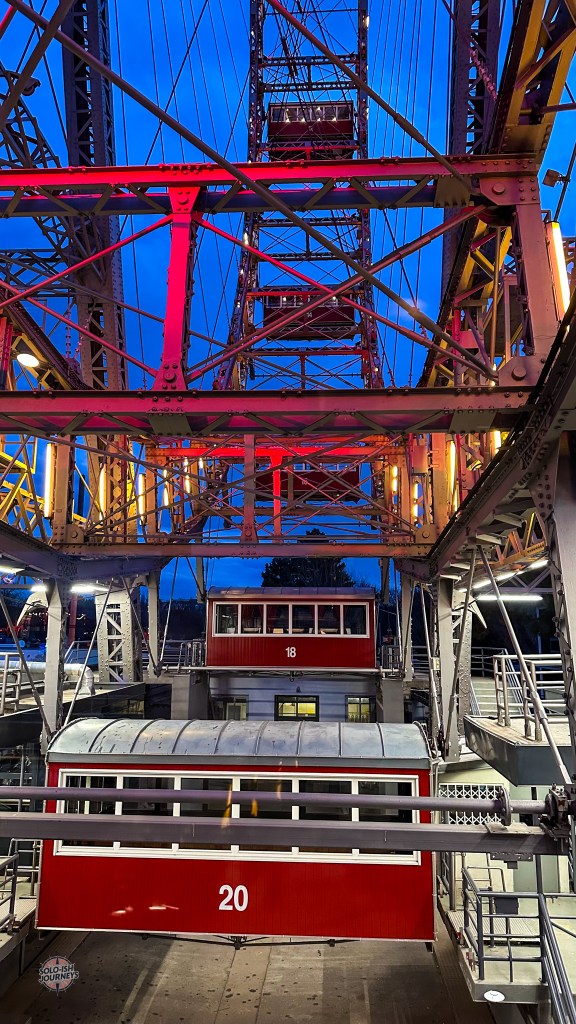
But we were here for one thing: the Wiener Riesenrad, Vienna’s iconic Giant Ferris Wheel.
Riding the Wiener Riesenrad: Vienna at Dusk
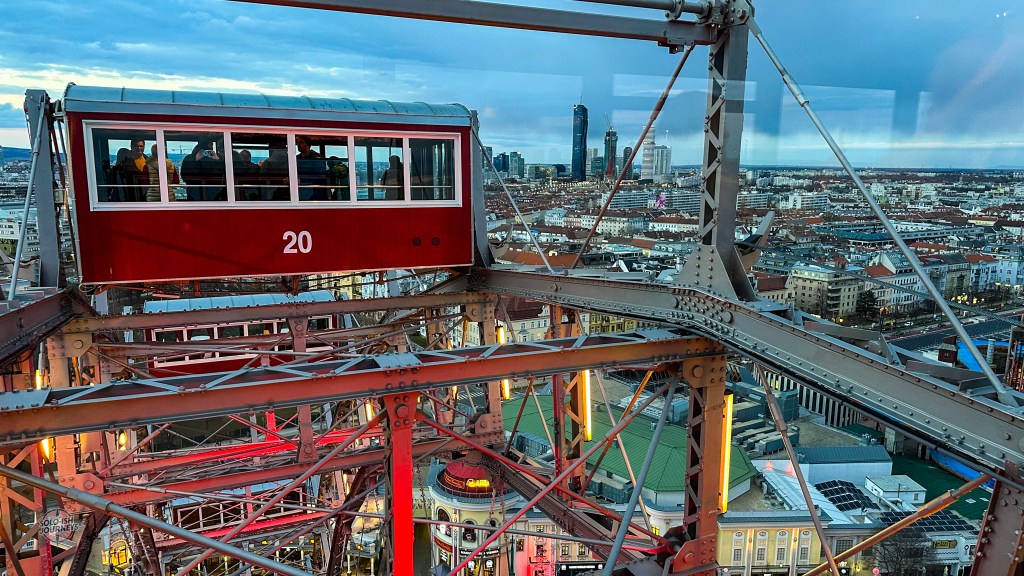
The Riesenrad has been a symbol of Vienna since 1897, making it one of the oldest operating Ferris wheels in the world. Standing at 64.75 meters tall, it was once the tallest Ferris wheel anywhere and remains one of the city’s most recognizable landmarks.
The ride itself is slow and peaceful – more like floating than spinning.
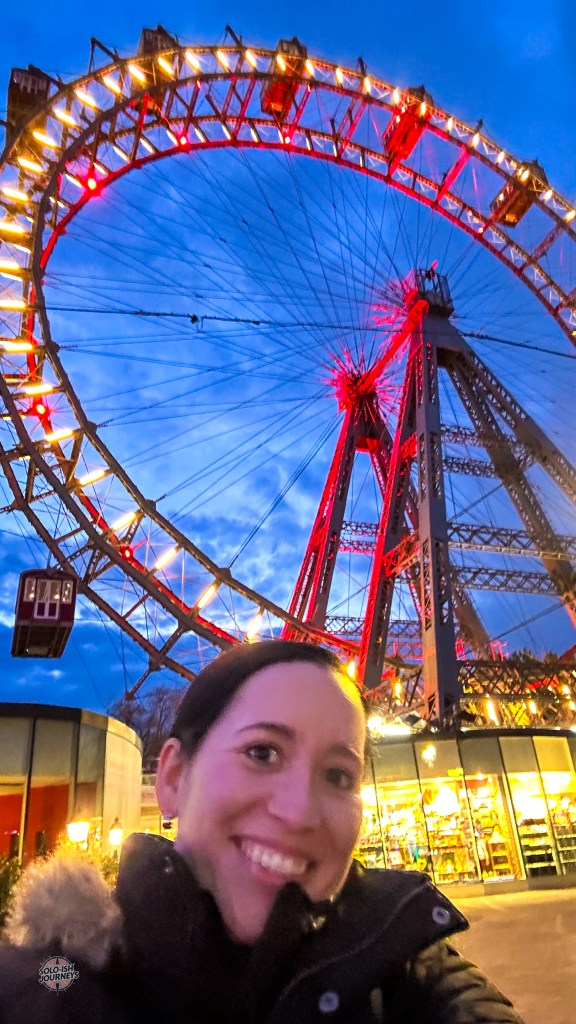
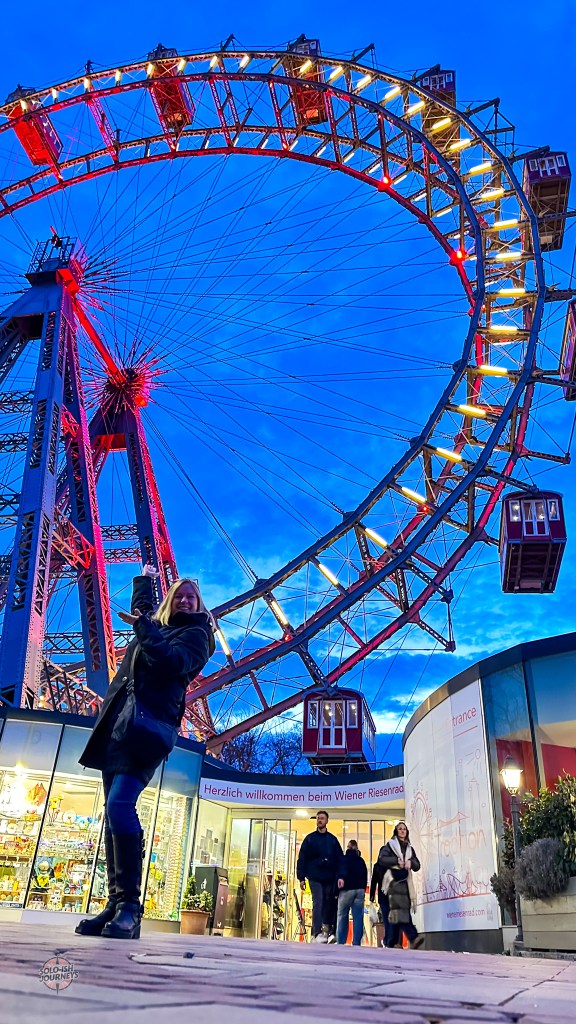
When we got off, the wheel was fully illuminated against the night sky, so naturally everyone wanted photos. I may or may not have volunteered myself as the group photographer. I’m sure they thought I was a little unhinged, lying on the ground trying to get the perfect angle, but honestly? Their photos turned out great.
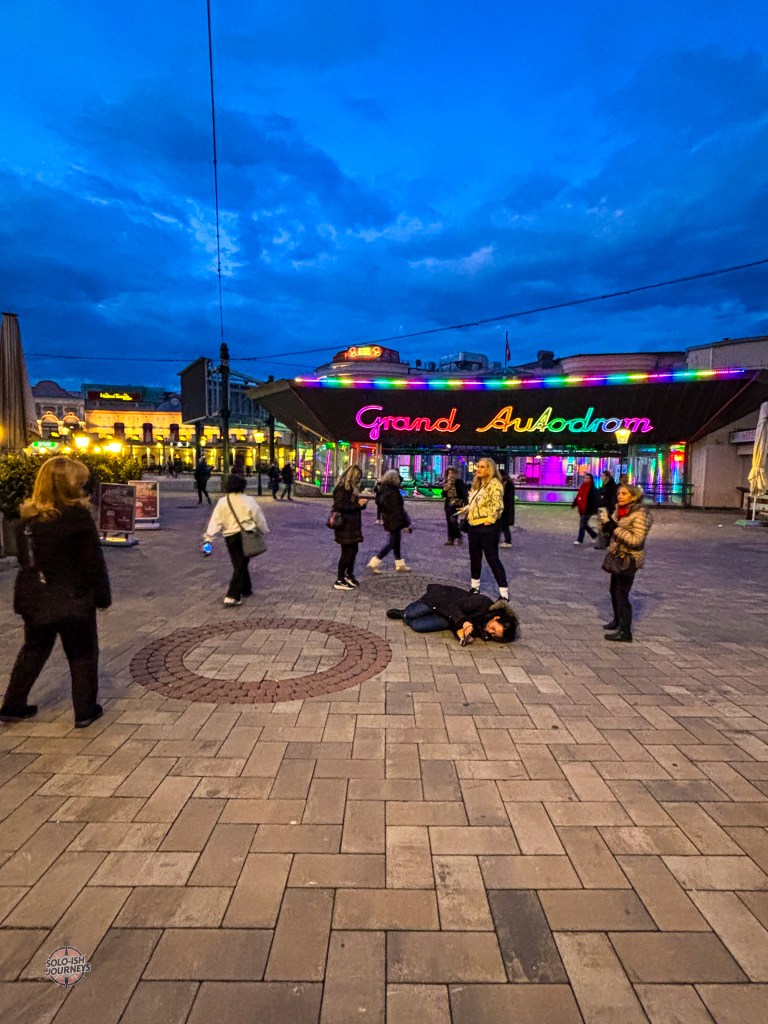
My own photos… well, let’s just say I snapped a quick selfie on the way out and called it a day. Solo travel problems.
Dinner, Wine & Viennese Music
After the Prater, we headed to a traditional Viennese tavern for dinner. Long wooden tables, warm lighting, and the kind of atmosphere that makes you want to stay for hours. We shared a hearty meal, drank plenty of Viennese wine, and were serenaded by musicians for most of the evening.
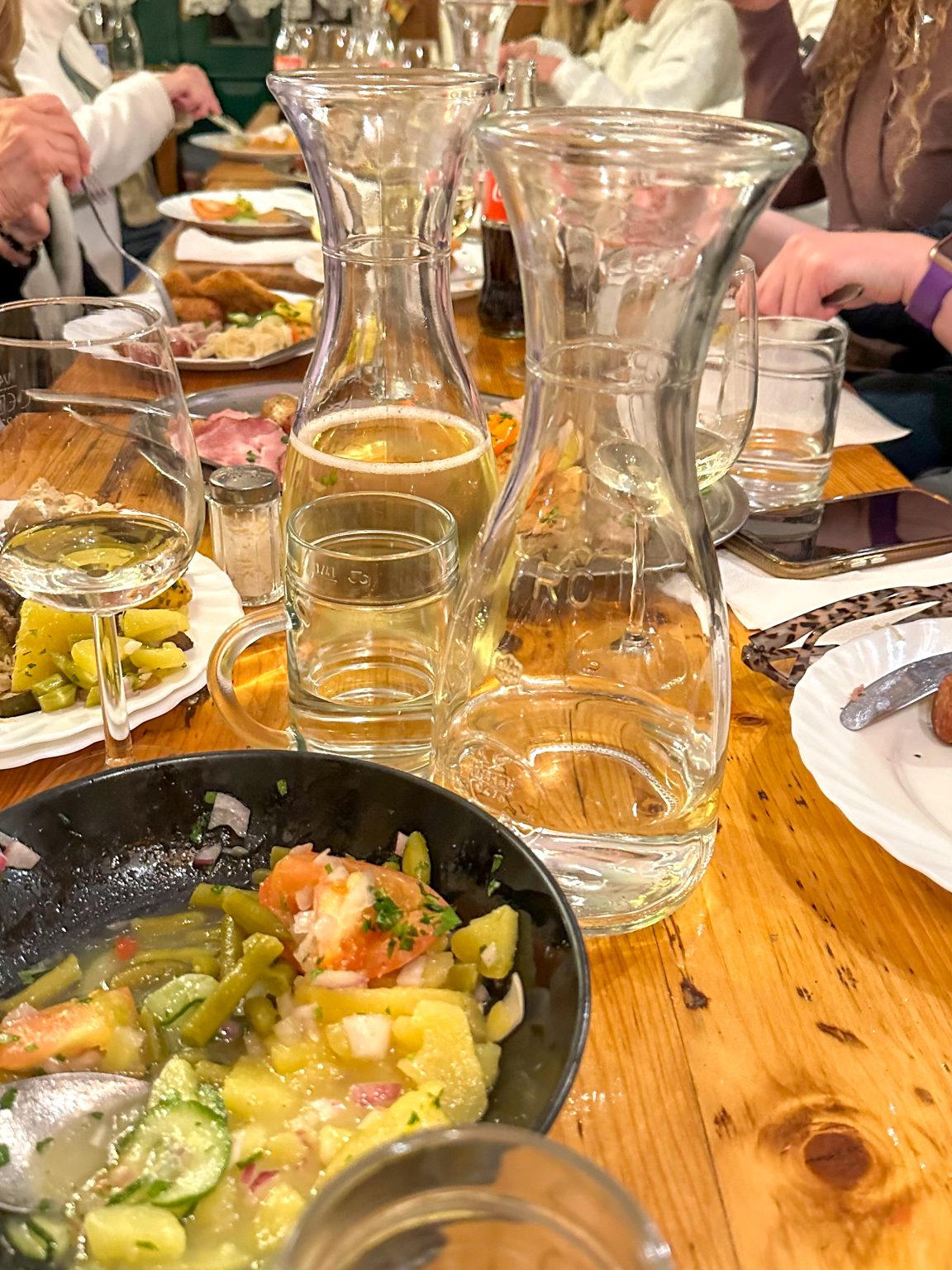
It felt like the kind of experience you hope for when you travel – authentic, lively, and full of laughter.
By the time we boarded the bus back to the hotel, everyone was in high spirits. I’m pretty sure someone sang into the bus microphone the entire ride home. Honestly? It was the perfect ending to the night.
FAQ: Visiting Melk Abbey, Wurstelprater & the Riesenrad
Q: Is Melk Abbey worth visiting? A: Absolutely. Its Baroque architecture, historic library, and dramatic location above the Danube make it one of Austria’s most impressive landmarks.
Q: Do you need a guided tour for Melk Abbey? A: For certain areas – yes. Some interior sections, including parts of the church, require an approved local guide.
Q: What is Wurstelprater? A: A historic amusement park in Vienna with over 200 attractions, open year‑round with varying hours.
Q: How old is the Wiener Riesenrad? A: It was built in 1897 and is one of the oldest operating Ferris wheels in the world.
Q: How long is the Riesenrad ride? A: Typically 10–20 minutes, depending on loading times and cabin movement.
Q: Is the Prater Christmas Market worth visiting? Q: While I haven’t been (yet!), it’s known for festive lights, rides, and seasonal treats – so it’s on my list for a future winter trip.
More Photos! Click to view.

 Solo-ish Journeys
Leave a comment